𝕥𝕣𝕖𝕖 𝕥𝕒𝕩𝕠𝕟𝕠𝕞𝕪

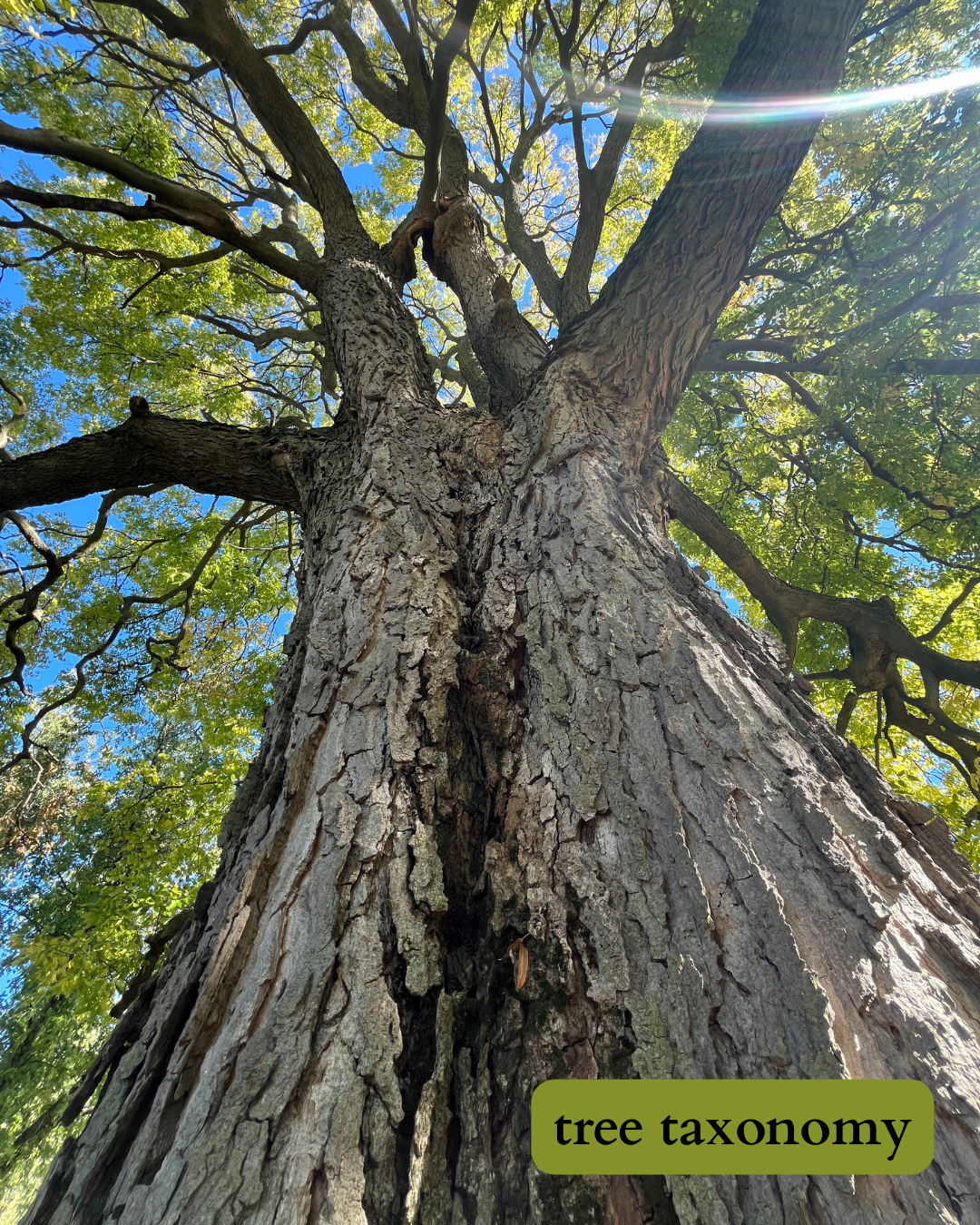
photo looking up at a giant hackberry tree with dark text on a green background that says: “tree taxonomy”.
giant northern hackberry tree

although i’m not a fan of hierarchies, i did want to make a quick note about how trees are commonly classified these days–although this is just one form of knowledge or way of seeing/ knowing. we can think of these categories as groupings (rather than a hierarchy) that range from broadest to most specific and can help us identify each tree and understand how certain trees are more or less related.

the taxonomy groupings (hierarchy) is as follows:
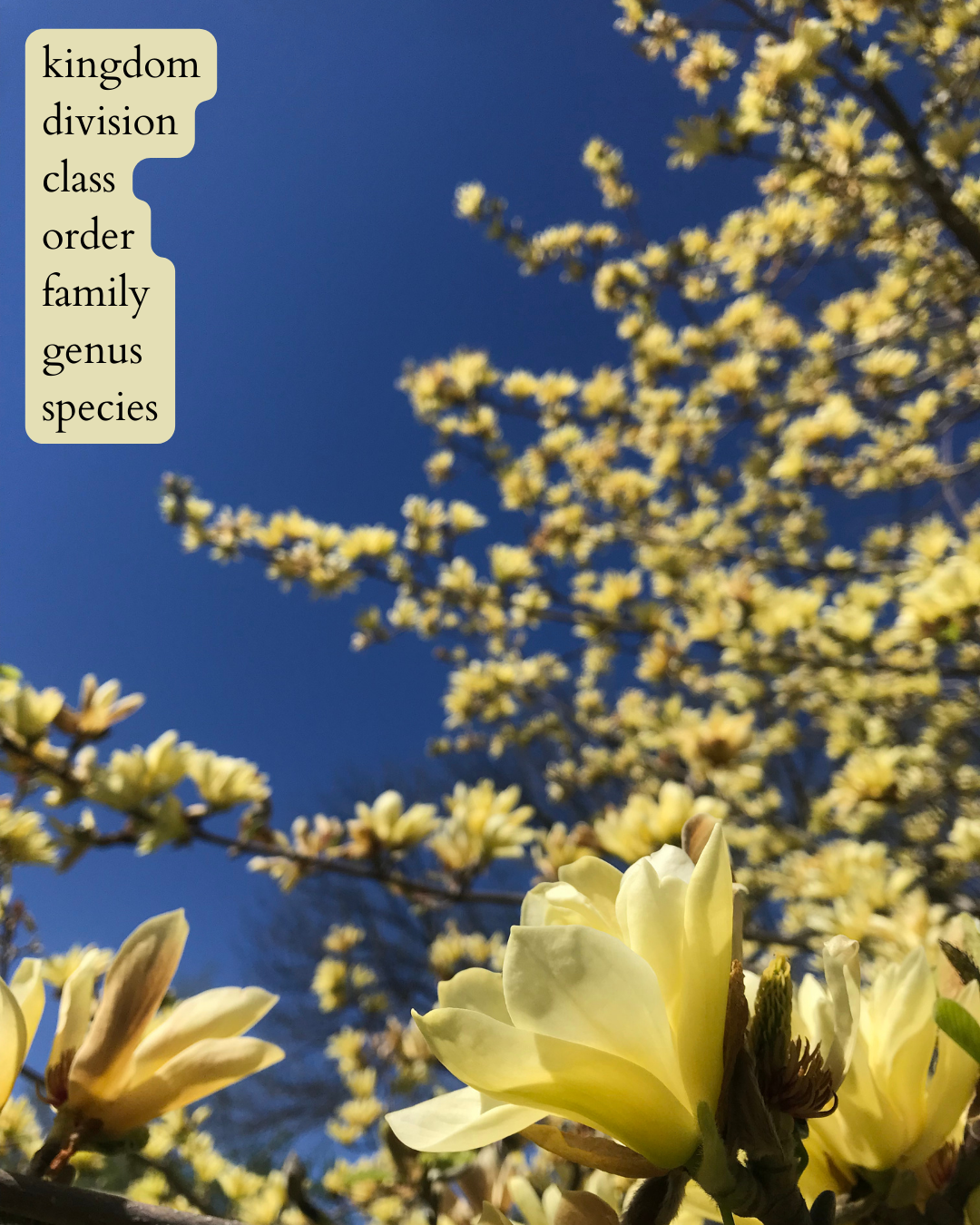
photo of a blooming magnolia with pale yellow flowers with dark text on a pale yellow background that says: “kingdom, division, class, order, family, genus, species”.
blooming magnolia
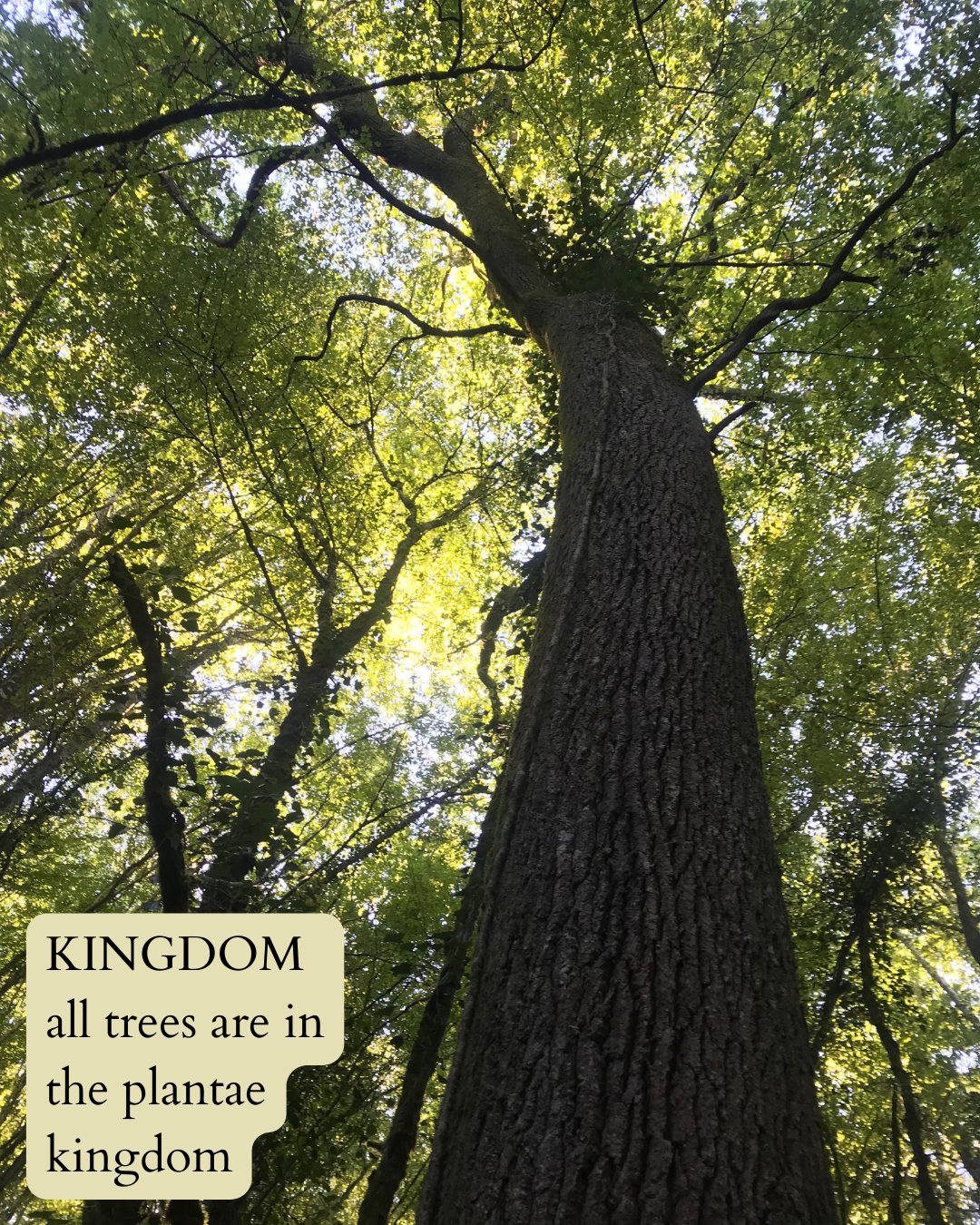
 photo looking up at a large tulip tree with dark text on pale yellow background that says: “KINGDOM, all trees are in the plantae kingdom”.
old tulip tree in the smoky mountains
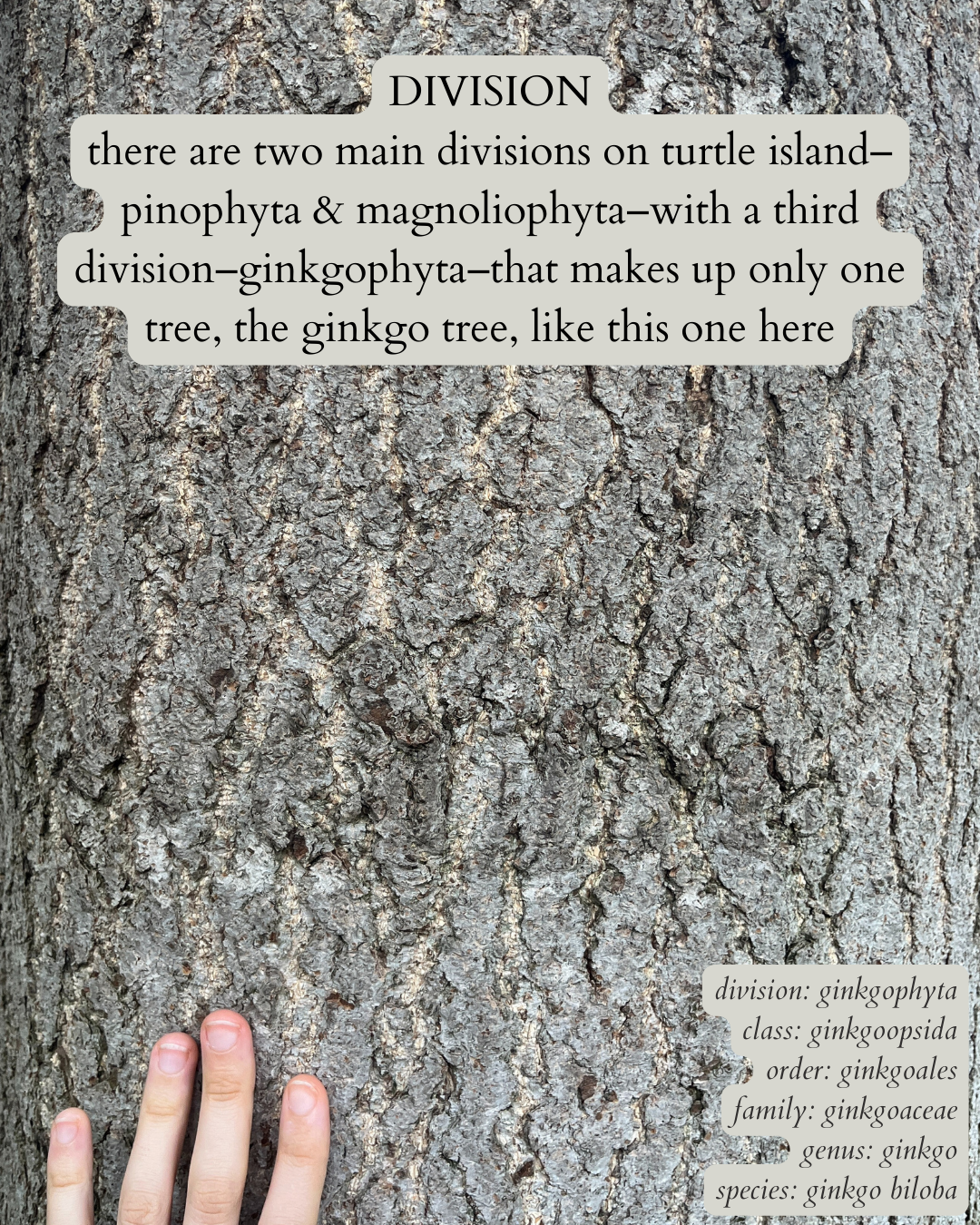
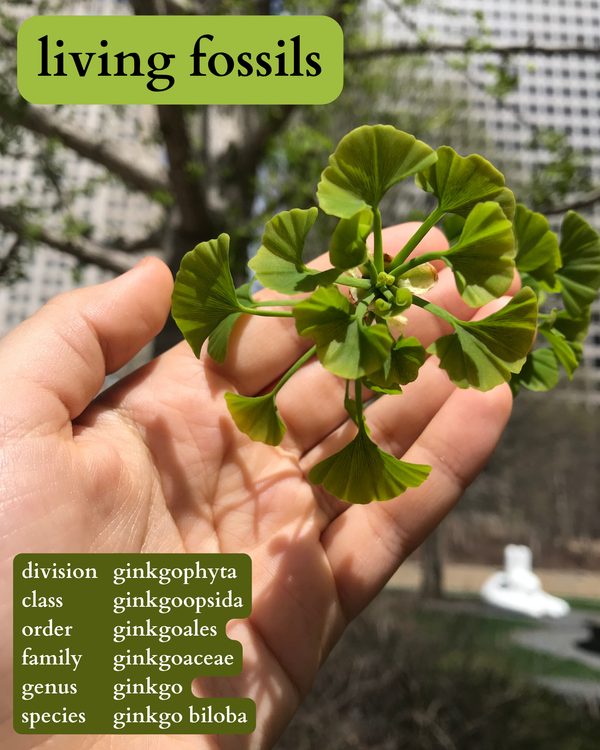
photo of mature ginkgo bark with white text on a dark gray background that says: “DIVISION, there are two main divisions on turtle island–pinophyta & magnoliophyta–with a third division–ginkgophyta–that makes up only one tree, the ginkgo tree, like this one here”. then in the same text, but italics in the bottom right corner: “division: ginkgophyta. class: ginkgoopsida. order: ginkgoales. family: ginkgoaceae. genus: ginkgo. species: ginkgo biloba”.
mature ginkgo bark
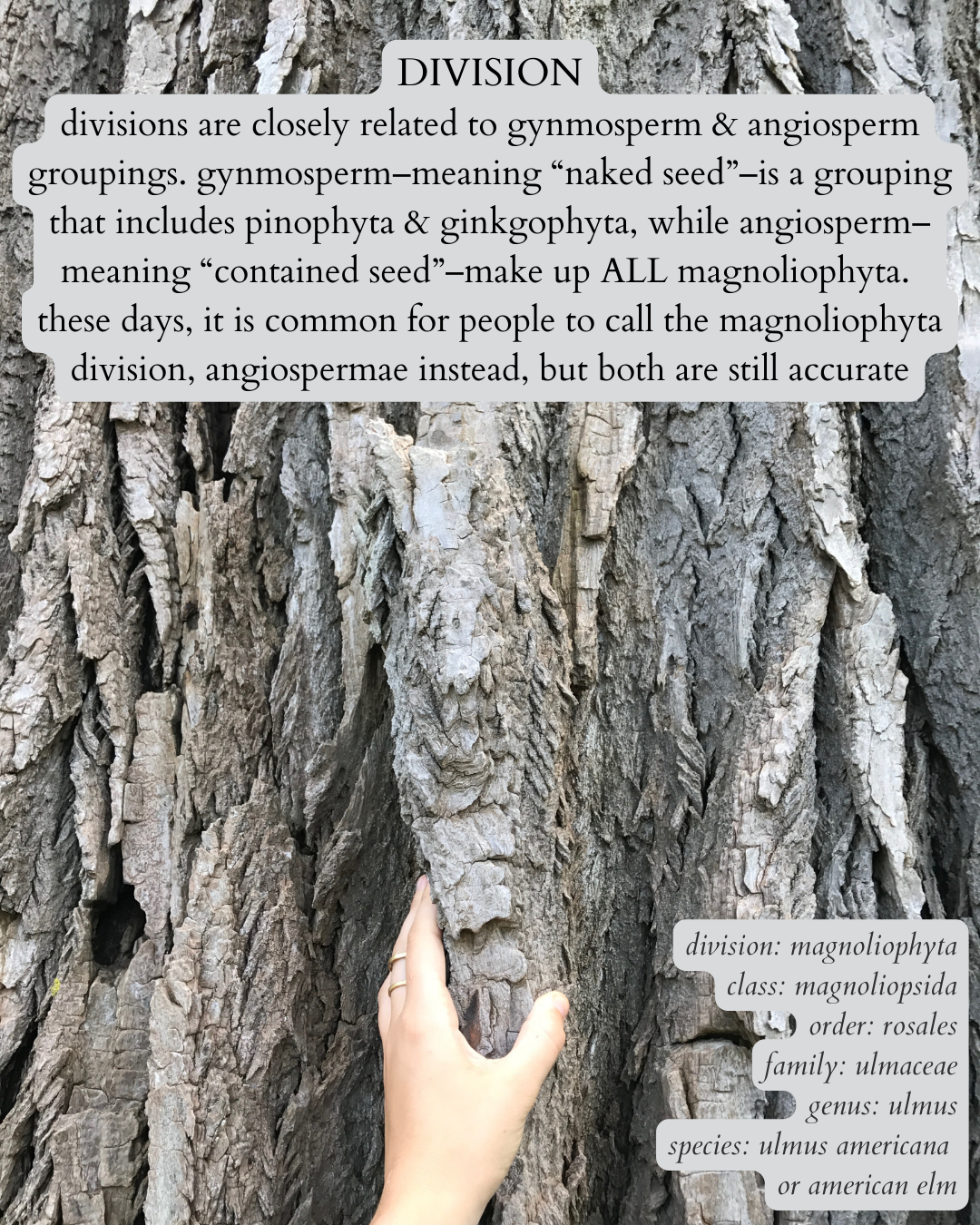
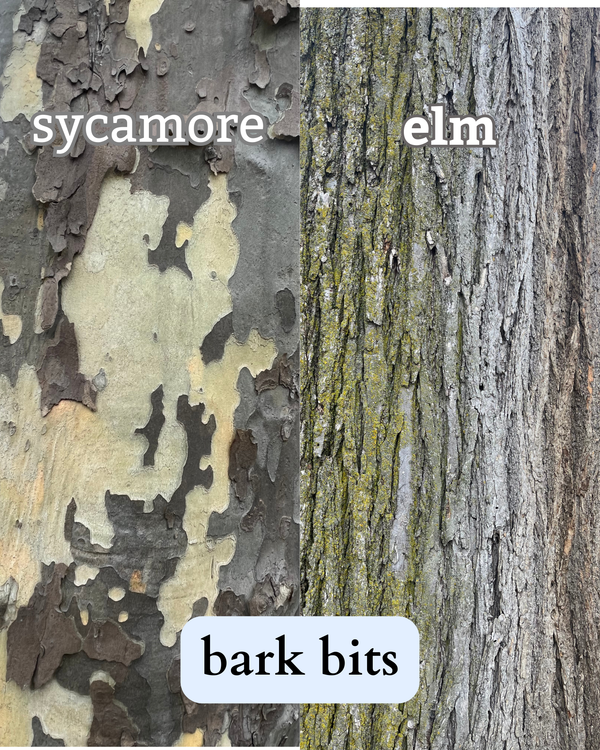
photo of old, deeply grooved elm bark with white text on a dark gray background that says: “divisions are closely related to gynmosperm & angiosperm groupings. gynmosperm–meaning “naked seed”–is a grouping that includes pinophyta & ginkgophyta, while angiosperm–meaning “contained seed”–make up all magnoliophyta. these days, it is common for people to call the magnoliophyta division, angiospermae instead, but both are still accurate.” then in the same text, but italics in the bottom right corner: “division: magnoliophyta. class: magnoliopsida. order: rosales. family: ulmaceae. genus: ulmus. species: ulmus americana or american elm”.
mature elm bark
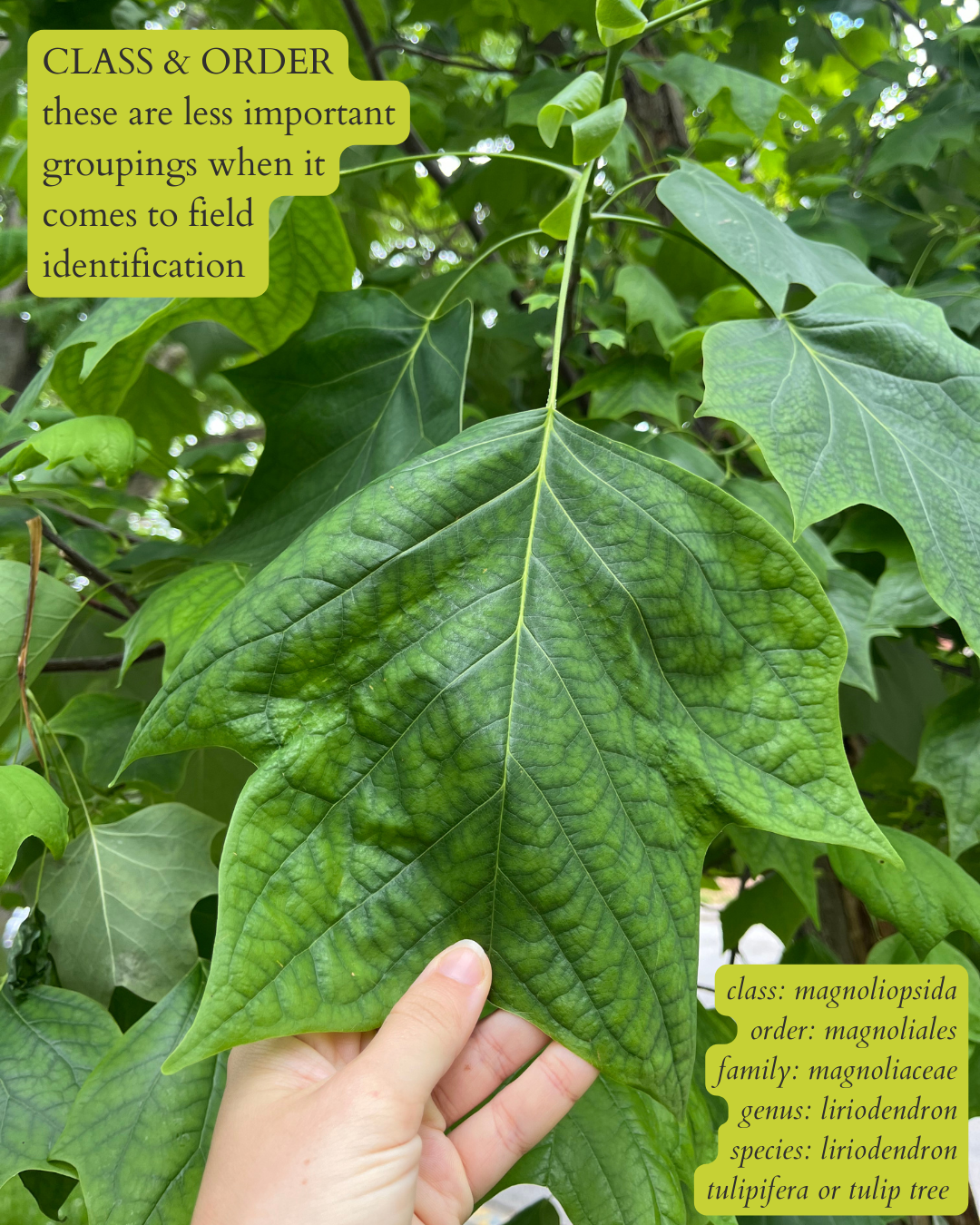
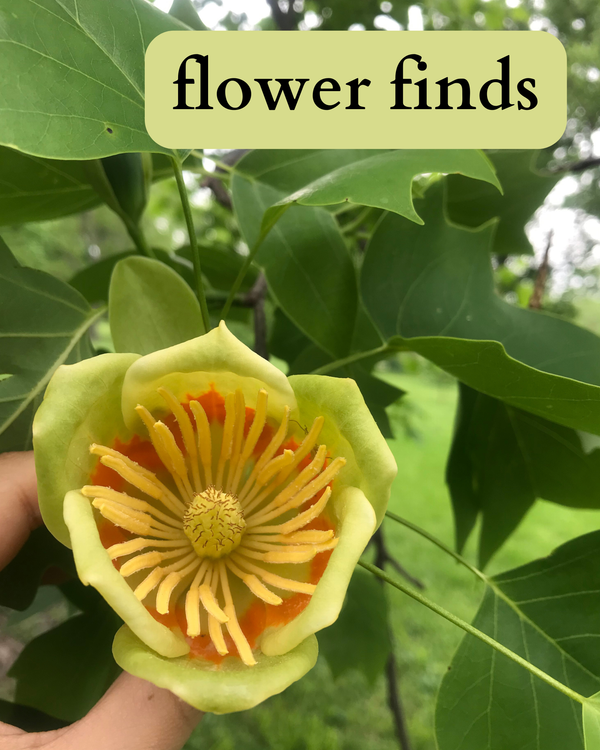
photo of a large tulip tree leaf with dark text on bright green background that says: “CLASS & ORDER, these are less important groupings when it comes to field identification”. then in the same text, but italics in the bottom right corner: “class: magnoliopsida. order: magnoliales. family: magnoliaceae. genus: liriodendron. species: liriodendron tulipifera or tulip tree”.
large tulip tree leaves
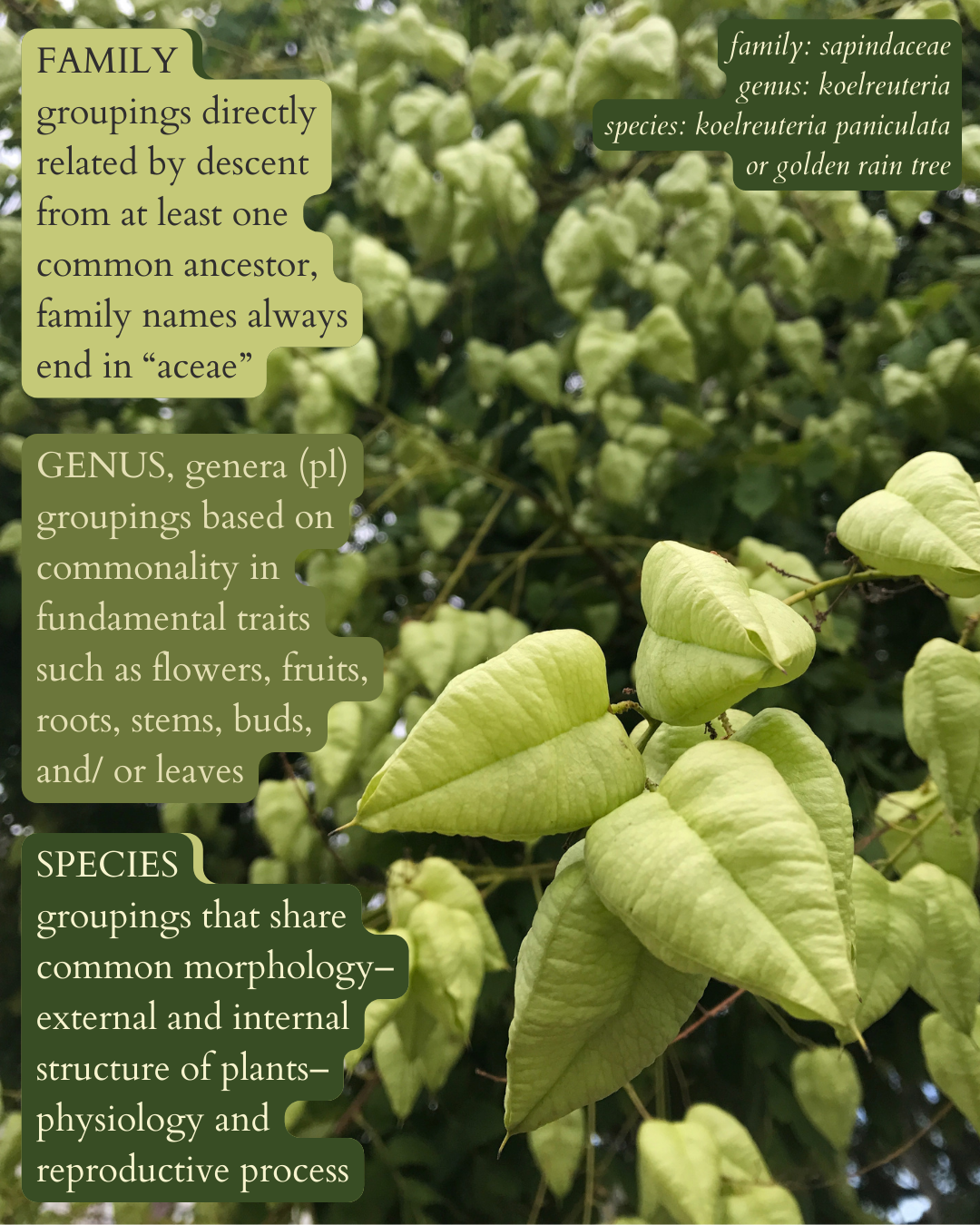
photo of a many pods on a golden rain tree with text in three groupings on backgrounds of varying shades of green that says: “FAMILY, groupings directly related by descent from at least one common ancestor, family names always end in ‘aceae’. GENUS, genera (pl), groupings based on commonality in fundamental traits such as flowers, fruits, roots, stems, buds, and/ or leaves. SPECIES, groupings that share common morphology–external and internal structure of plants–physiology and reproductive process”. then in the same text, but italics in the top right corner: “family: sapindaceae. genus: koelreuteria. species: koelreuteria paniculata or golden rain tree”.
golden rain tree pods

here are some examples of these groupings from the FAGACEAE family which including oaks, chestnuts, & beeches 🌳🌳🌳
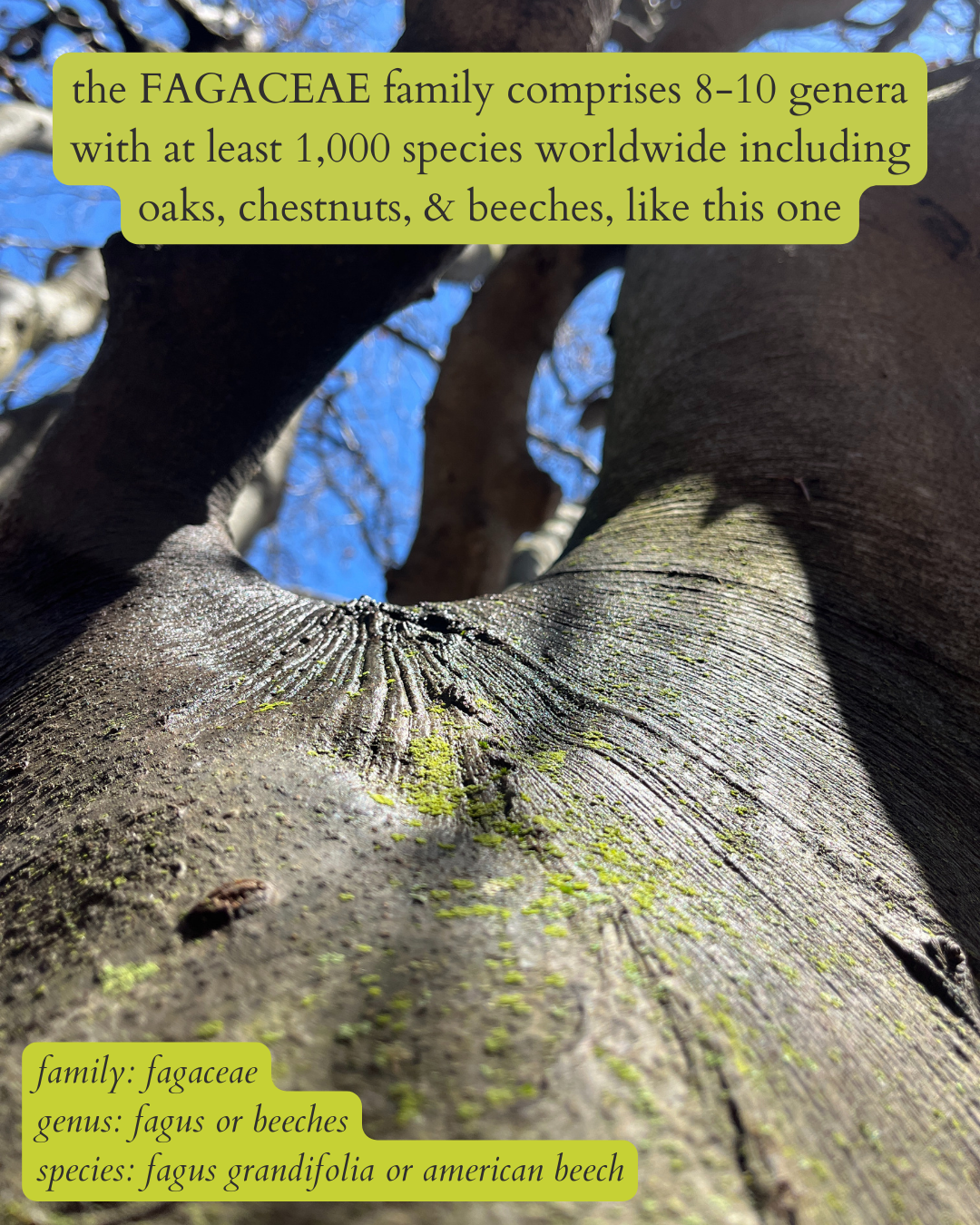
close up photo of beech tree bark with dark text on a bright green background that says: “the FAGACEAE family comprises 8-10 genera with at least 1,000 species worldwide including oaks, chestnuts, & beeches, like this one”. then in the same text, but italics in the bottom left corner: “family: fagaceae. genus: fagus or beeches. species: fagus grandifolia or american beech”.
beech tree bark with lichen growing on it
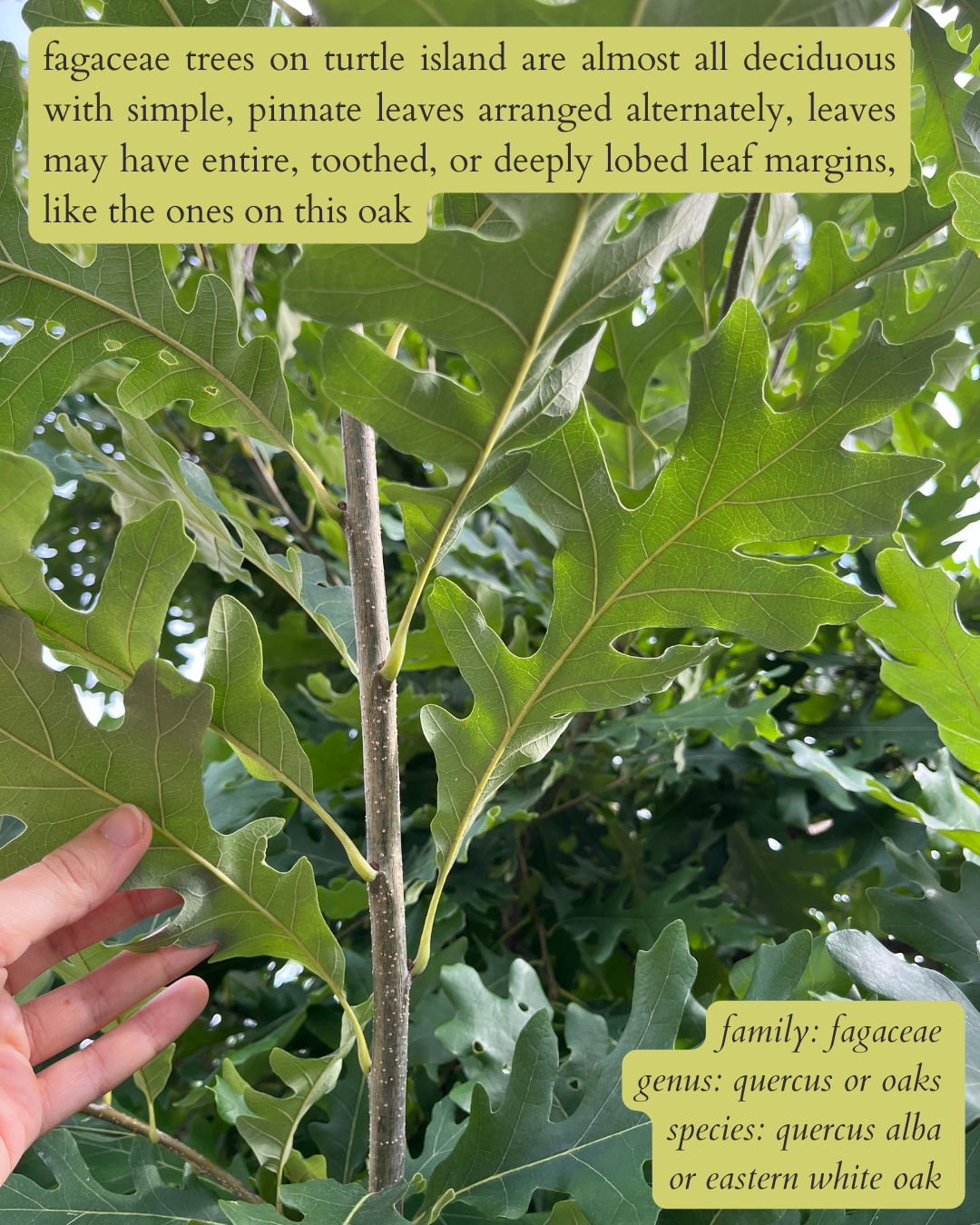
photo of the alternating leaves of a white oak with dark text on a light green background that says: “fagaceae trees on turtle island are almost all deciduous with simple, pinnate leaves arranged alternately, leaves may have entire, toothed, or deeply lobed leaf margins, like the ones on this oak”.  then in the same text, but italics in the bottom left corner: “family: fagaceae. genus: quercus or oaks. species: quercus alba or eastern white oak”.
eastern white oak tree leaves - notice the alternate leaf arrangement where the leaves grow singly from the twig without another leaf directly across the twig
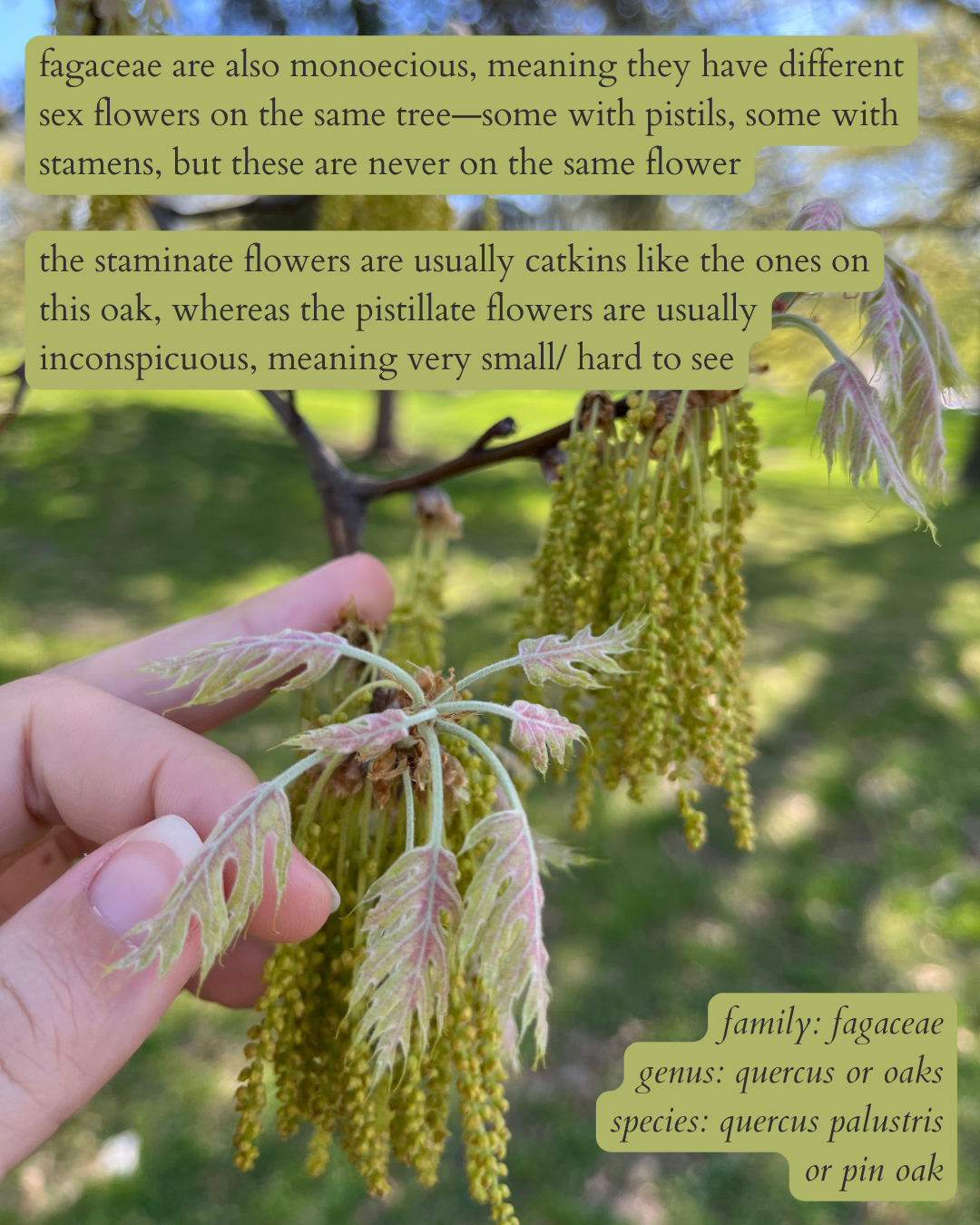
photo of baby pin oak leaves & catkins with dark text on light green background that says: “fagaceae are also monoecious, meaning they have different sex flowers on the same tree—some with pistils, some with stamens, but these are never on the same flower. the staminate flowers usually are catkins like the ones on this oak, whereas the pistillate flowers are usually inconspicuous, meaning very small/ hard to see”. then in the same text, but italics in the bottom right corner: “family: fagaceae. genus: quercus or oaks. species: quercus palustris or pin oak”.
baby pin oak leaves in spring with catkins (cylindrical, usually unisexual, flowers)–these are staminate catkins
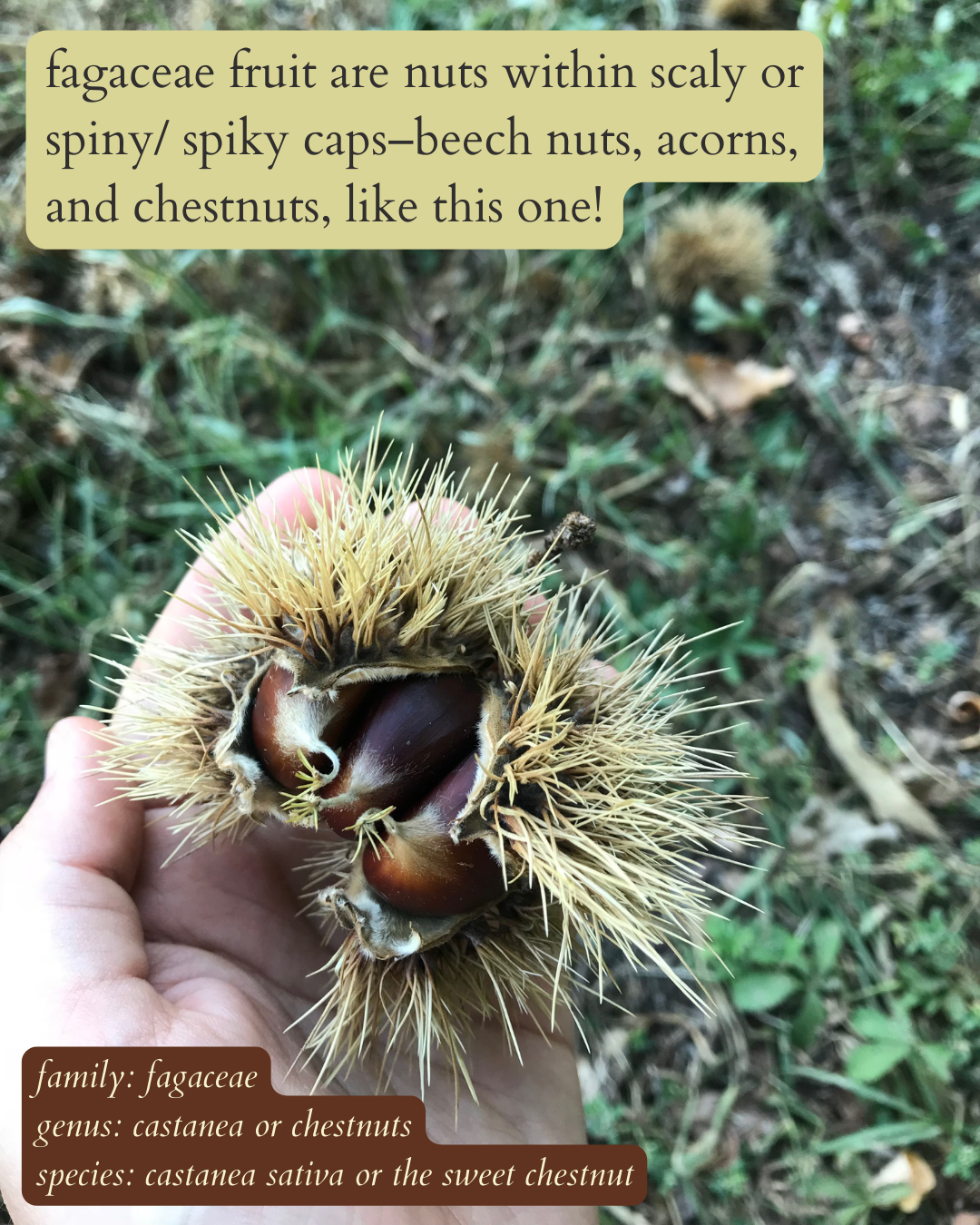
photo of a chestnut splitting open from it’s spiny casing with dark text on pale yellow-brown background that says: “fagaceae fruits are nuts within a scaly or spiny/ spiky cap–beech nuts, acorns, and chestnuts, like this one!”. then in the same text, but italics in the bottom left corner: “family: fagaceae. genus: castanea or chestnuts. species: castanea sativa or the sweet chestnut”.
spiky (spiny) european chestnut–this species is not actually found on turtle island, but is very similar to castanea dentata or american chestnut which is native to turtle island

thanks for tuning in to another episode of tree friends with soph.