a bit about bark
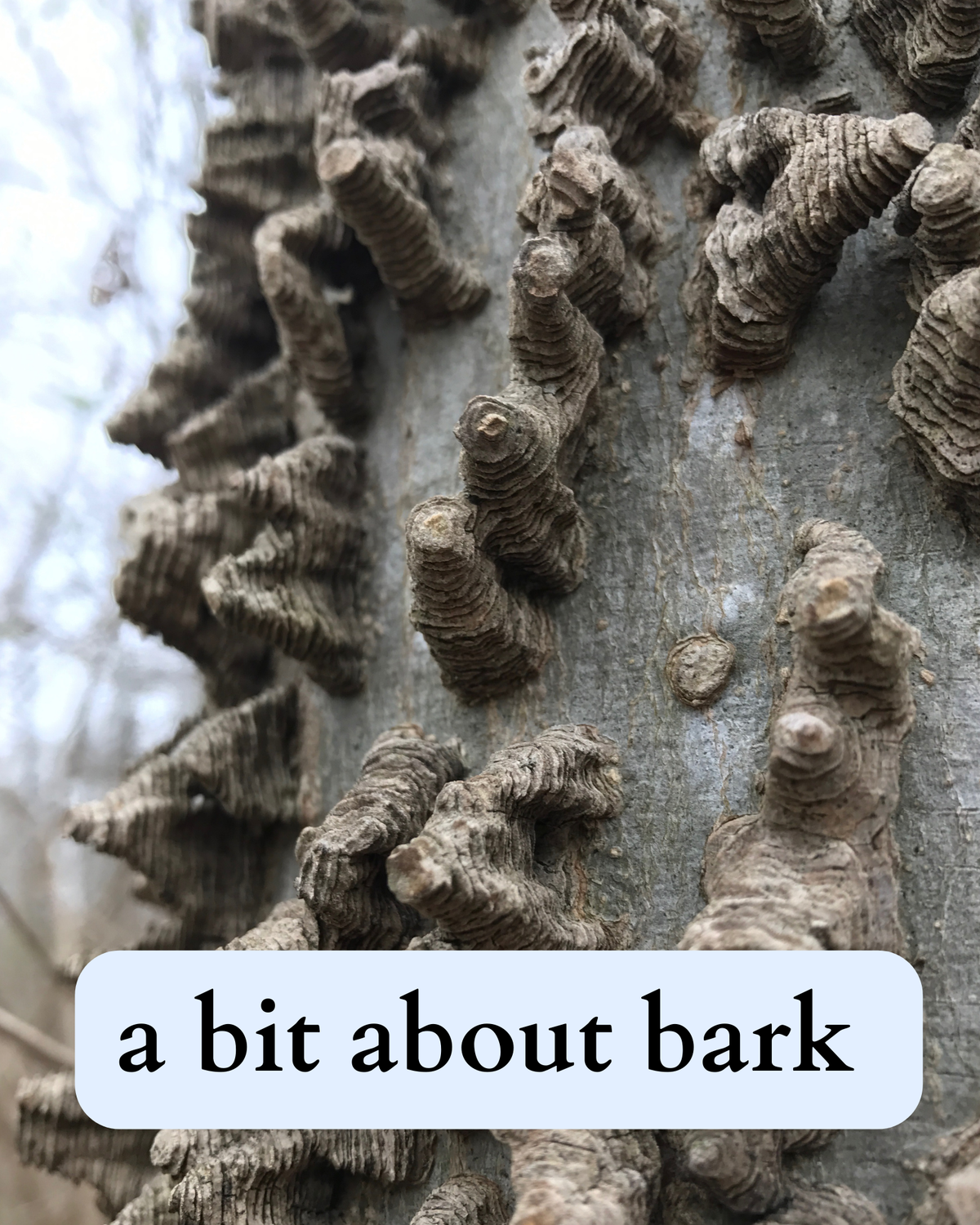
this bits about bark was originally posted on IG on 1/28/24
winter is a great time to test your bark knowledge, so we shared different barks that winter, starting with hackberry bark.
a tree’s bark is like their skin. what we see when we look at bark, the outer bark, keeps moisture in and infection out, but beneath the surface is an elevator network that functions like the tree’s plumbing, transporting important nutrients up and down the tree from roots to leaves and vice versa.
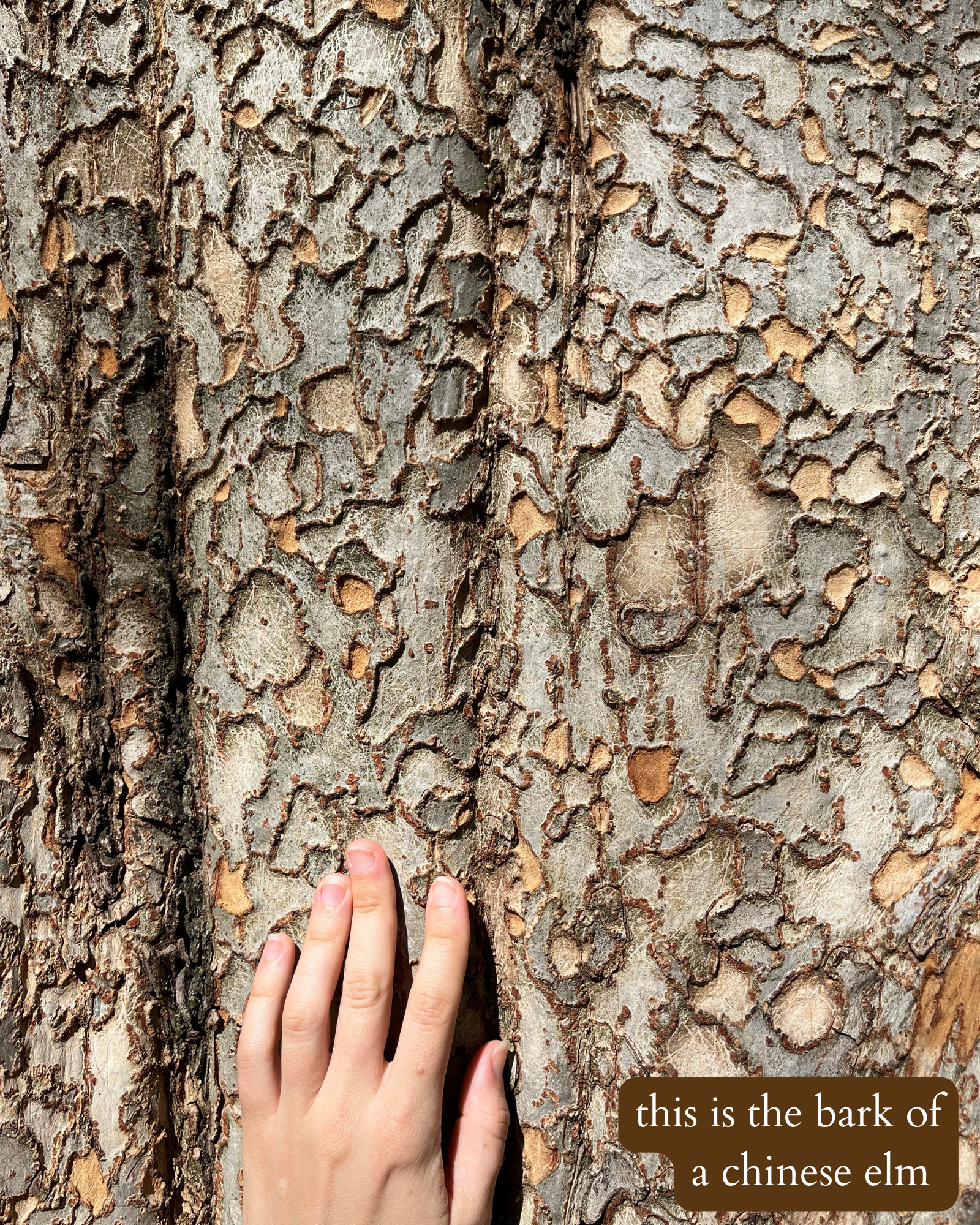
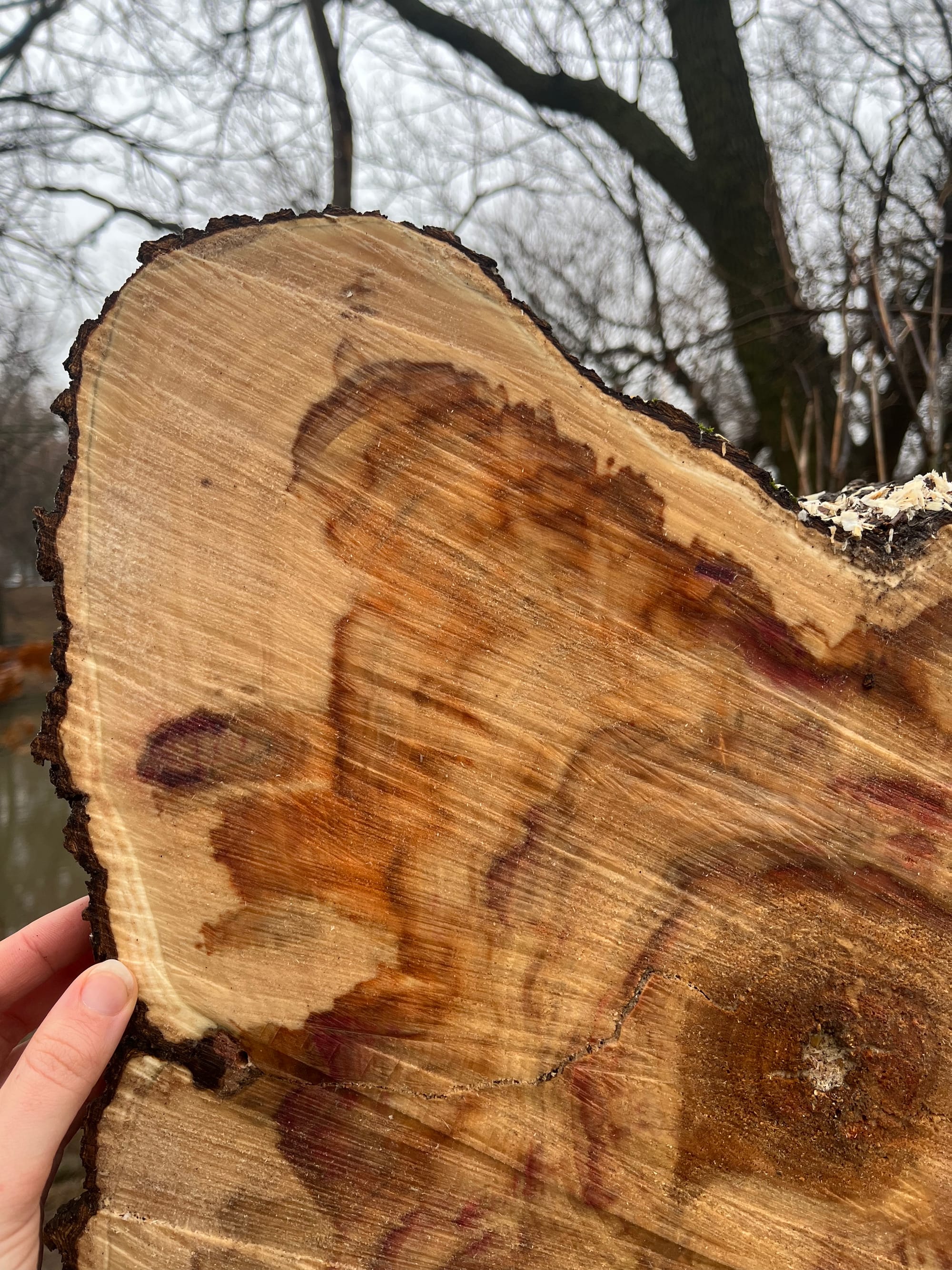
the under the bark is a layer called the phloem or inner bark and it carries sugars from the leaves down to the rest of the tree. then is the cambium, a reproductive layer that produces cells adding to the layers it’s between and increasing the trees girth. then deeper inside is the xylem or sapwood, which carries water and minerals the opposite way, from the roots up to the leaves.
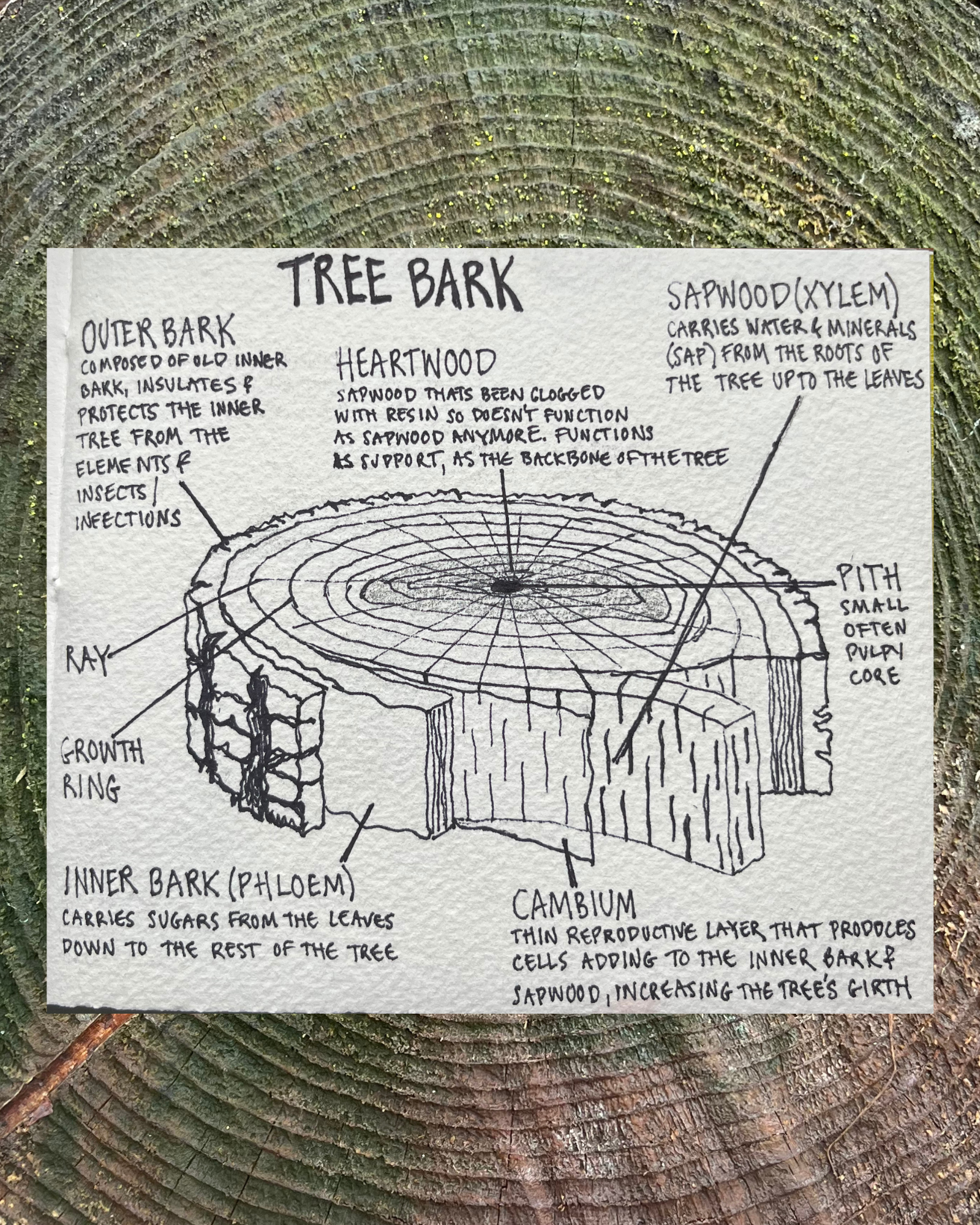
outer bark :: composed of old inner bark, insulates and protects the inner tree from the elements & insects/ infections
inner bark (phloem) :: carries sugars from the leaves down to the rest of the tree
cambium :: a thin reproductive layer that produces cells adding to the inner bark & sapwood, increasing the tree’s girth
sapwood (xylem) :: carries water and minerals (sap) from the roots of the tree up to the leaves
heartwood :: sapwood that’s been clogged with resin so doesn’t function as sapwood anymore. function is support, as the backbone of the tree
pith :: small, often pulpy core
when the sapwood cells “die”, they are pressed inward, becoming tough heartwood. heartwood is the backbone of the tree, helping them resist rot and insect attacks. when the inner bark cells “die”, they are pressed outwards, becoming part of the outer bark.
first up: hackberries!
northern are are common on this part of turtle island. their bark is very unique, as when you look at it closely you can see its layers distinctly creating small stalagmite-like knobs/ ridges–especially visable on young hackberries like the one on the left below. as hackberries age, they develop denser ridges (see photo on right), but if you look closely, you can still see their very distinct layers.
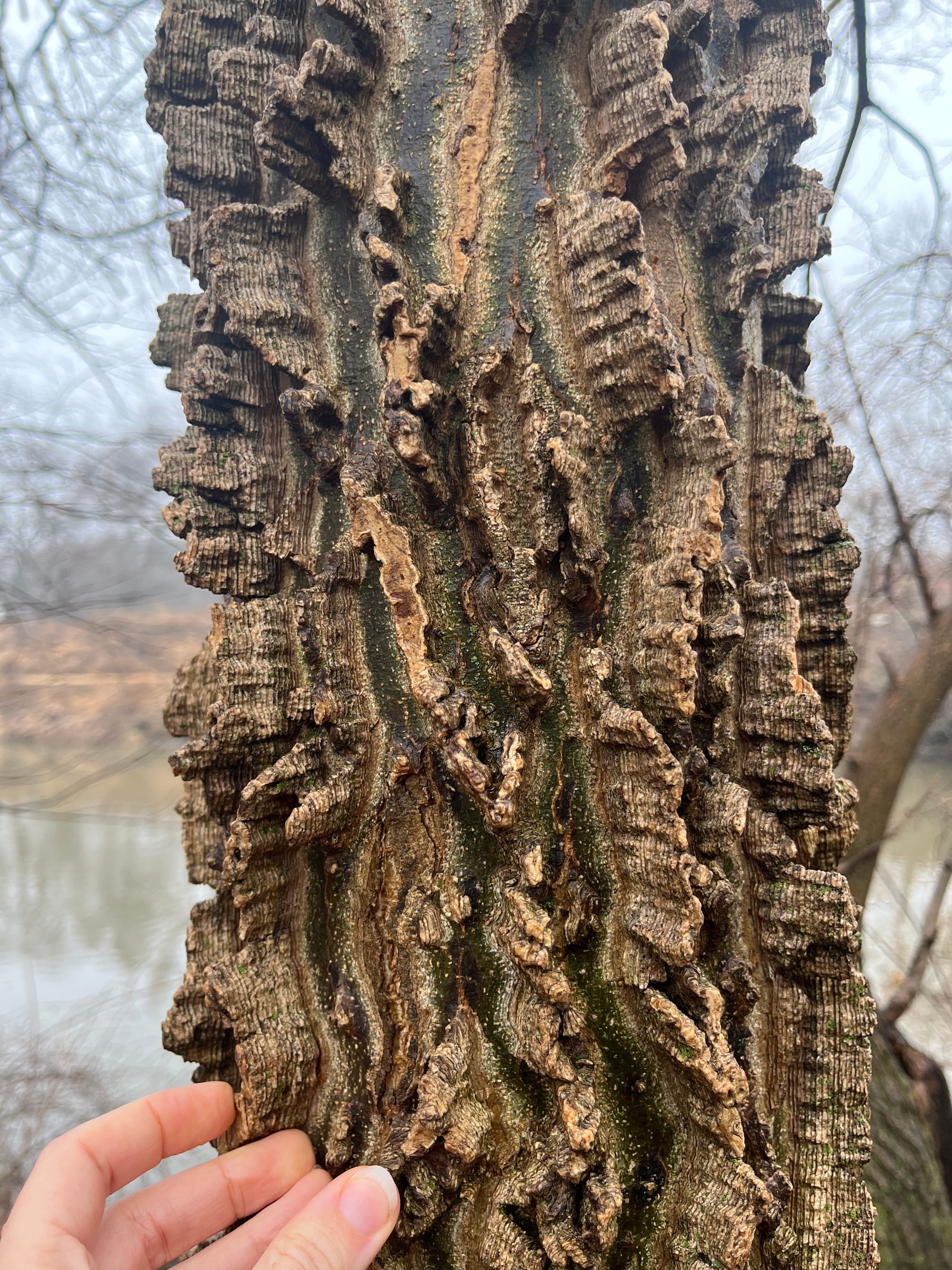
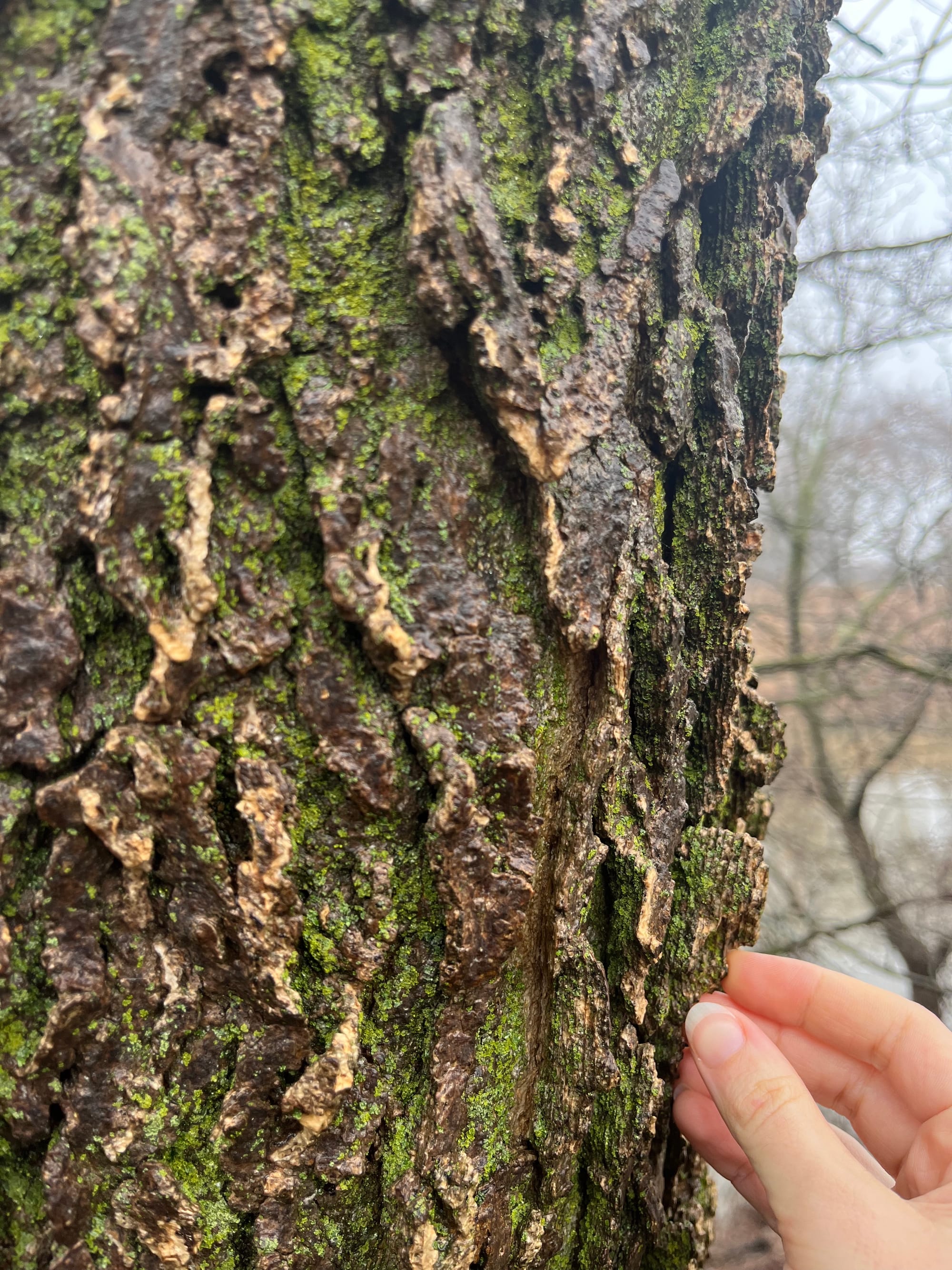
hackberry bark–young bark (left) and more mature bark (right)
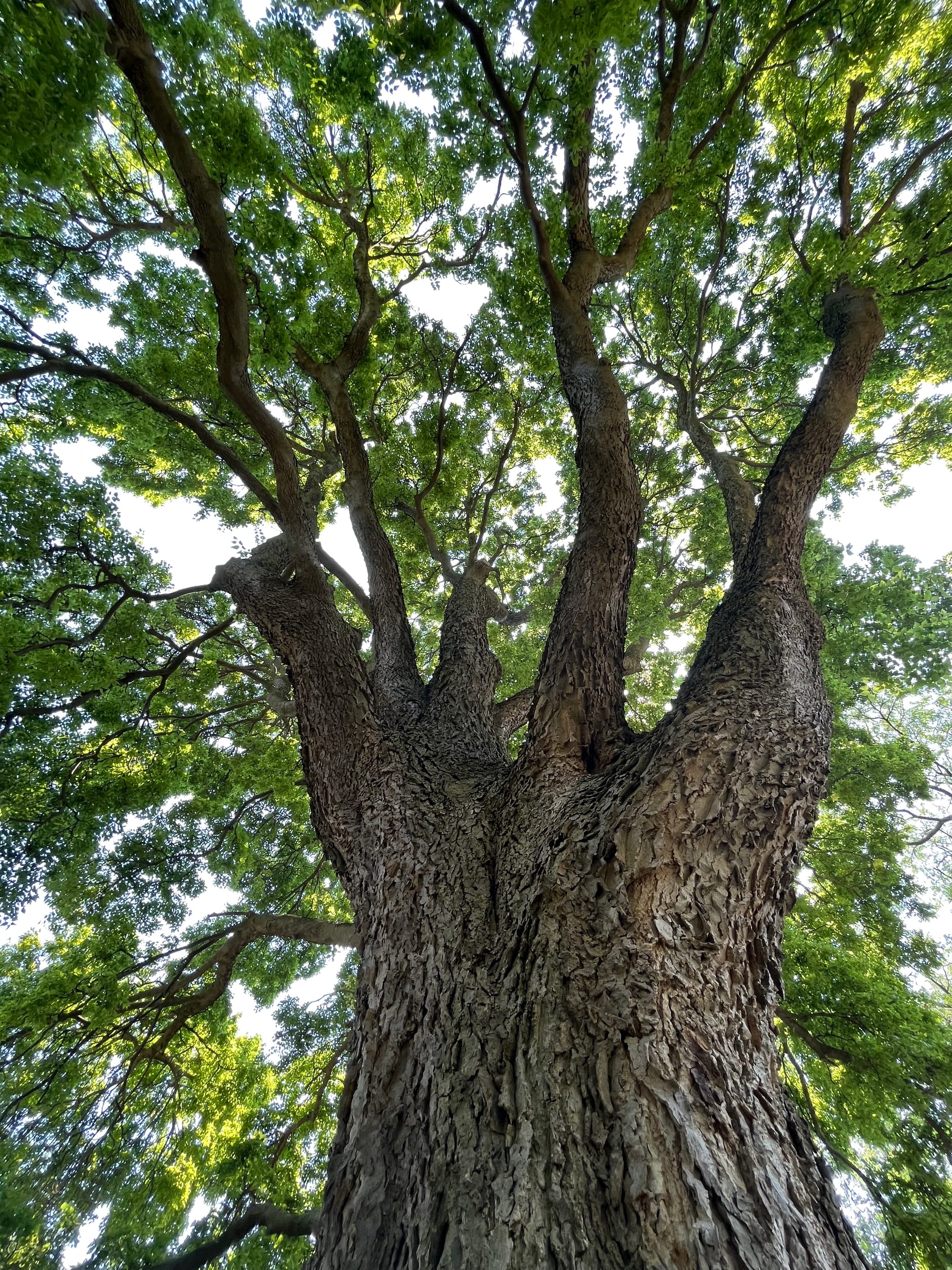
hackberries can grow to be over 125 feet tall!