ginkgos: living fossils
i recently watched Ildikó Enyedi's Silent Friend, a film whose main character is an elder ginkgo tree, befriended by a three different people across three different time periods–in 1908 by a German university's first female student, in 1972 by another young student, and in 2020 by a visiting neuroscientist professor during the Covid lockdown. considering the span of these time periods, i was reminded that a ginkgo is sometimes called the grandparent-grandchild tree, as it takes 20-30 years for ginkgo trees to mature and reproduce their own offspring, similar to the timing of human generations.
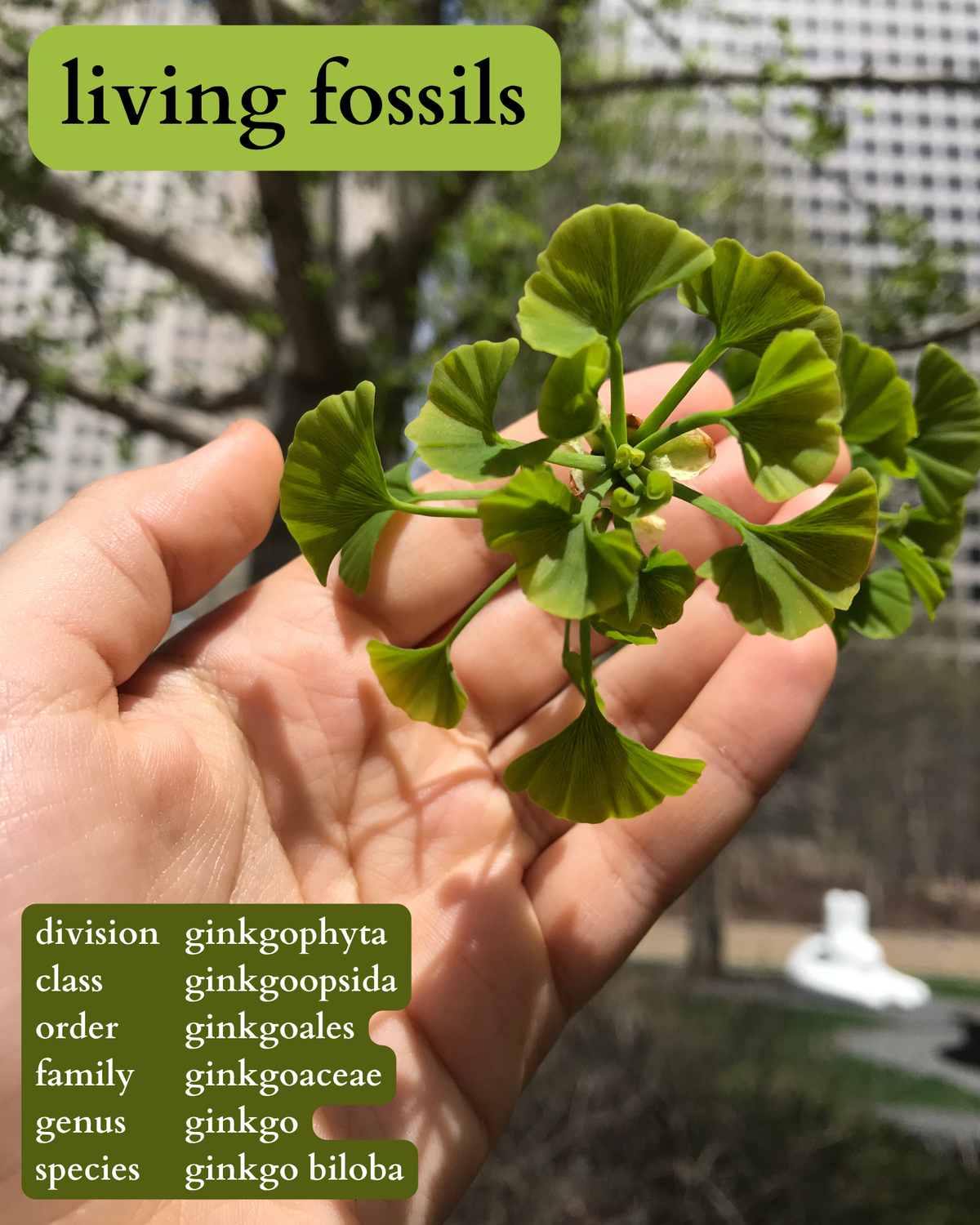
ginkos are truly living fossils. their genus dates back at least 270 million years and they are in a division of their own (ginkgophyta). only a few of their species have been identified in the fossil record, one still exists and that is the ginkgo biloba. these trees are also the only living connections between ferns and conifers.
they have survived A LOT, several ginkgo trees survived the atomic bombing of Hiroshima, even flowering the following spring, and at least four are still alive today.
ginkgos are native to east asia, specifically south-central and southeast china. an older chinese name for this plant is 銀果, meaning "silver fruit" (yínguǒ in Mandarin or Ngan-gwo in Cantonese) for their fruit which we’ll discuss later. they are sometimes called “maidenhair trees” as some believe their leaves resemble maidenhair ferns.
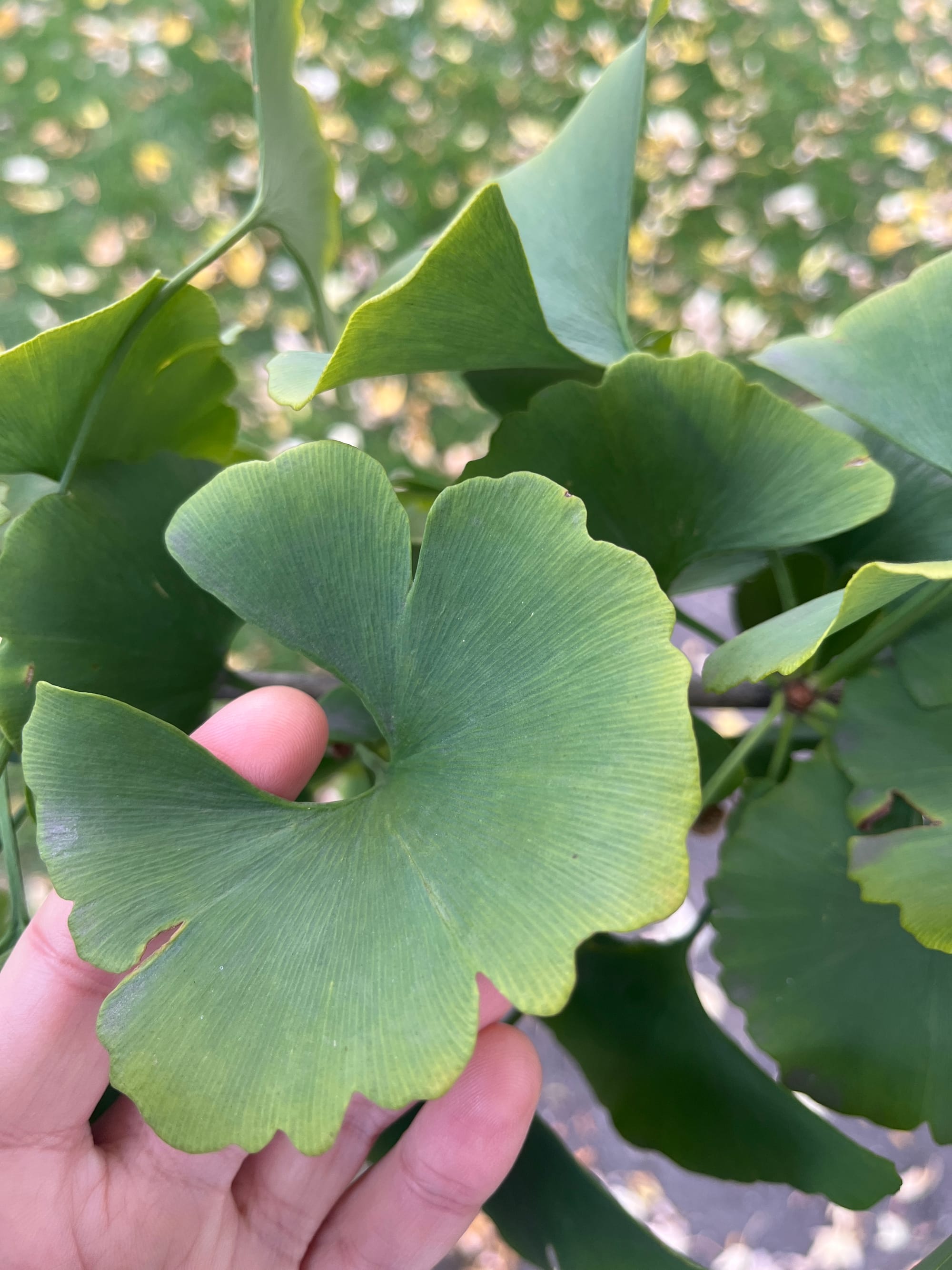
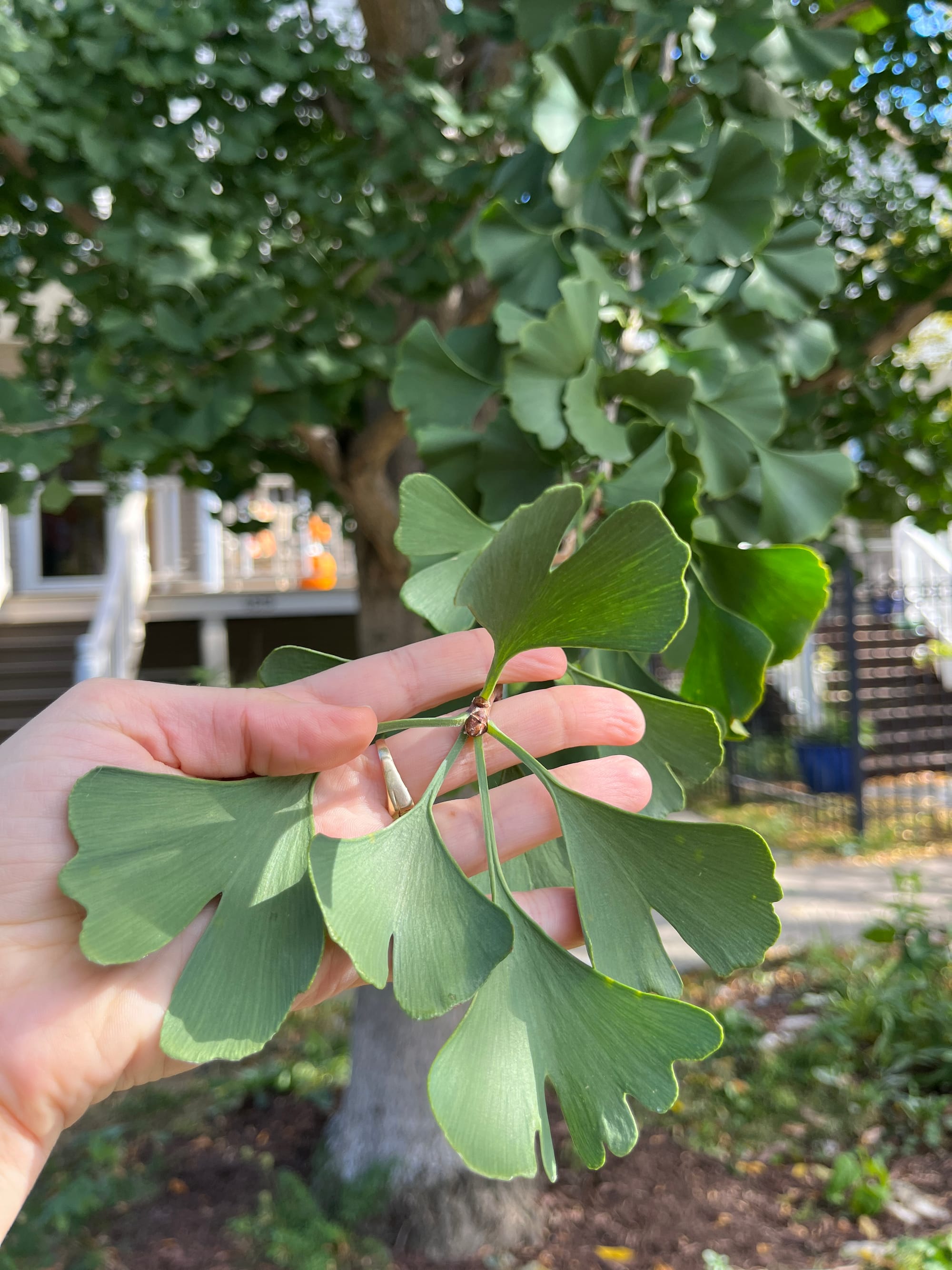
ginkgos are quite easy to identify.
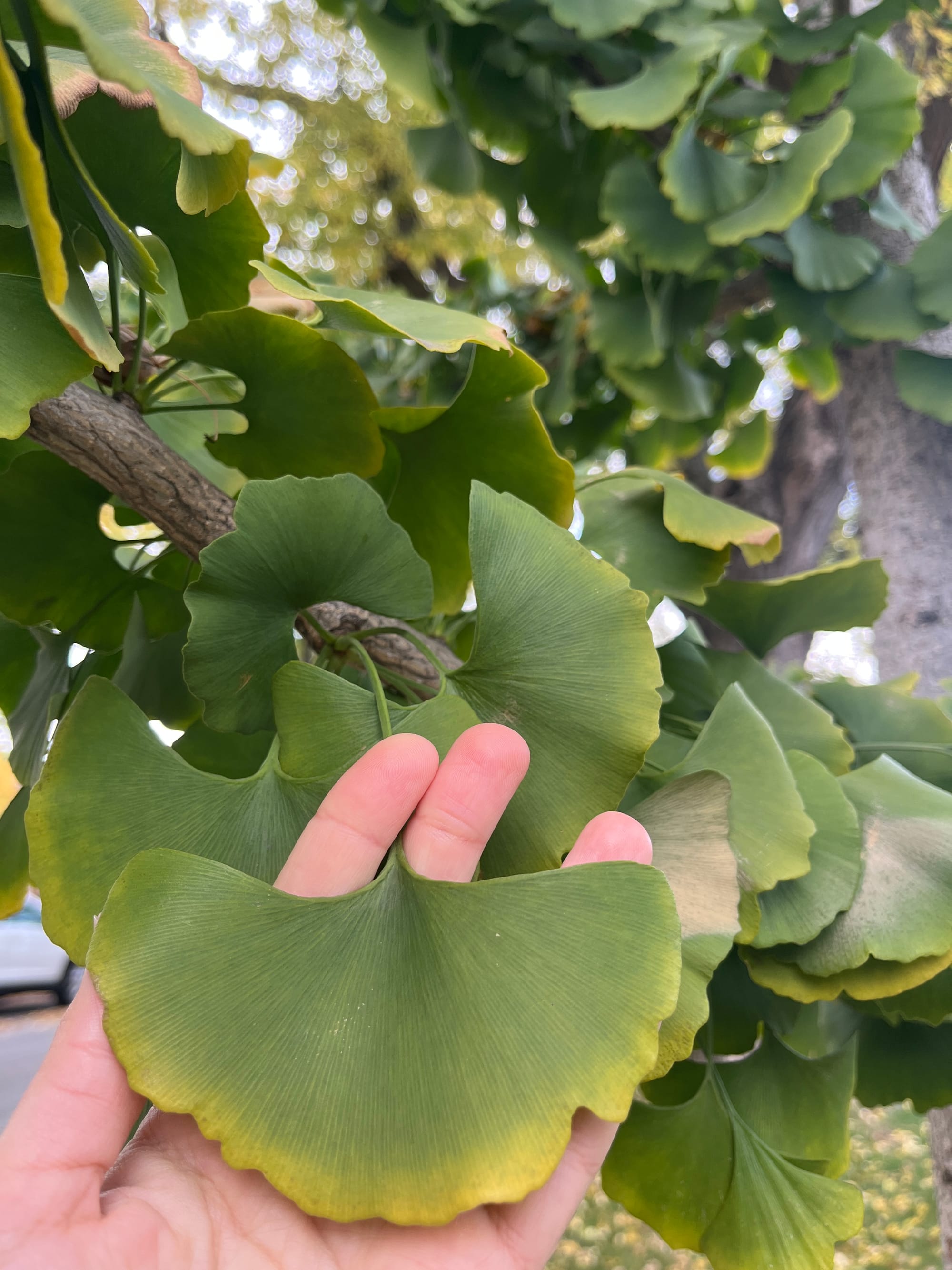
their LEAVES are unique to other modern deciduous trees and are similar to ferns with a fan-like vein pattern that forks repeatedly and never develops the net-like veins of other broadleaf trees. they are fan-shaped, somewhat leathery, and rich green with diverging (almost parallel) veins that never anastomose to form a network. no other living tree (or plant) has a fan shaped leaf with a radiating, parallel vein pattern. some–not all–leaves are two-lobed, or notched–like the one above. the genus name–biloba–comes from the Latin bis, "twice" and loba, "lobed".
ginkgo leaves turn yellow in the fall and tend to drop all at once, or within a several day period, leaving carpets of leaves on the ground like this.
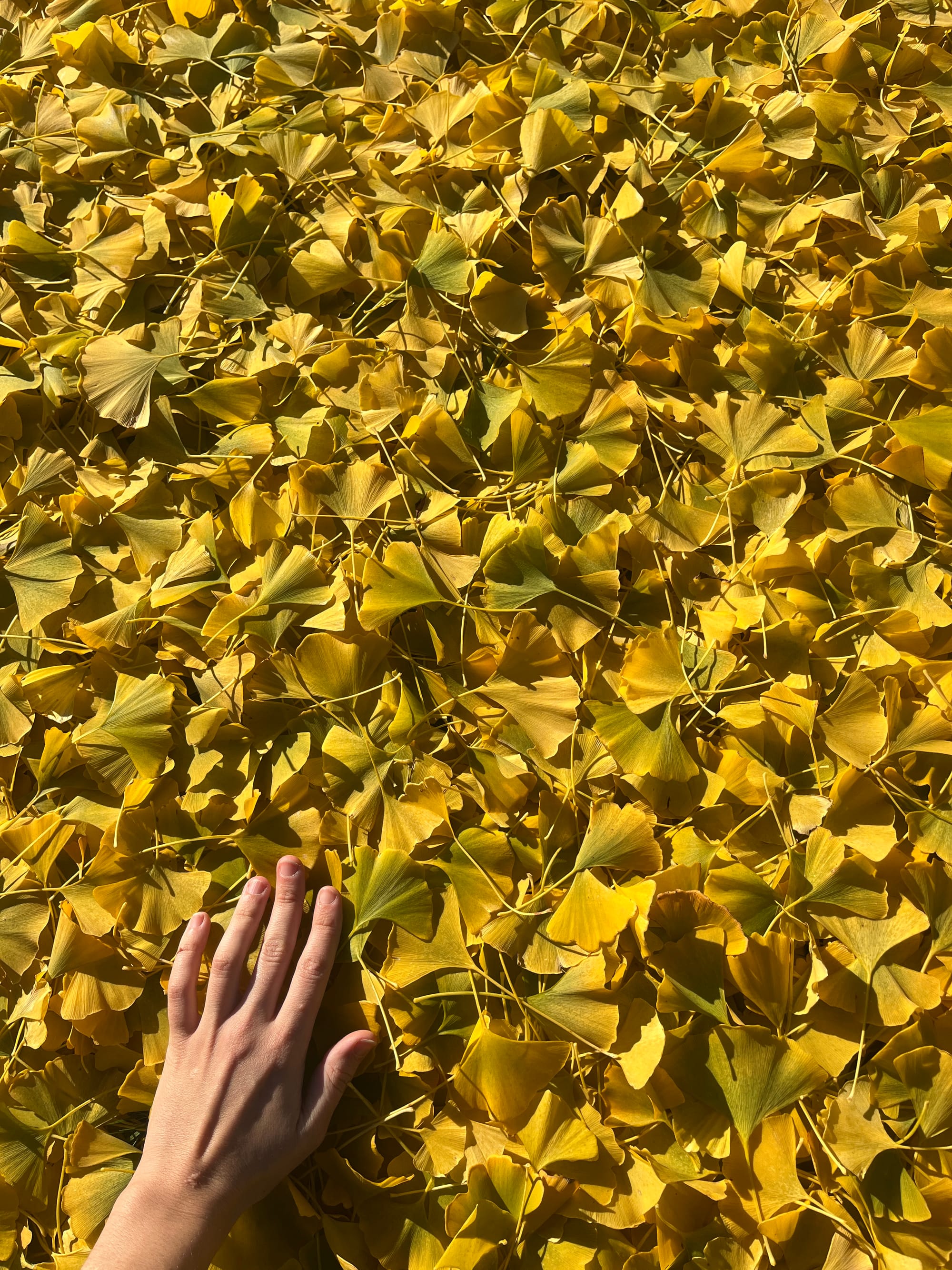
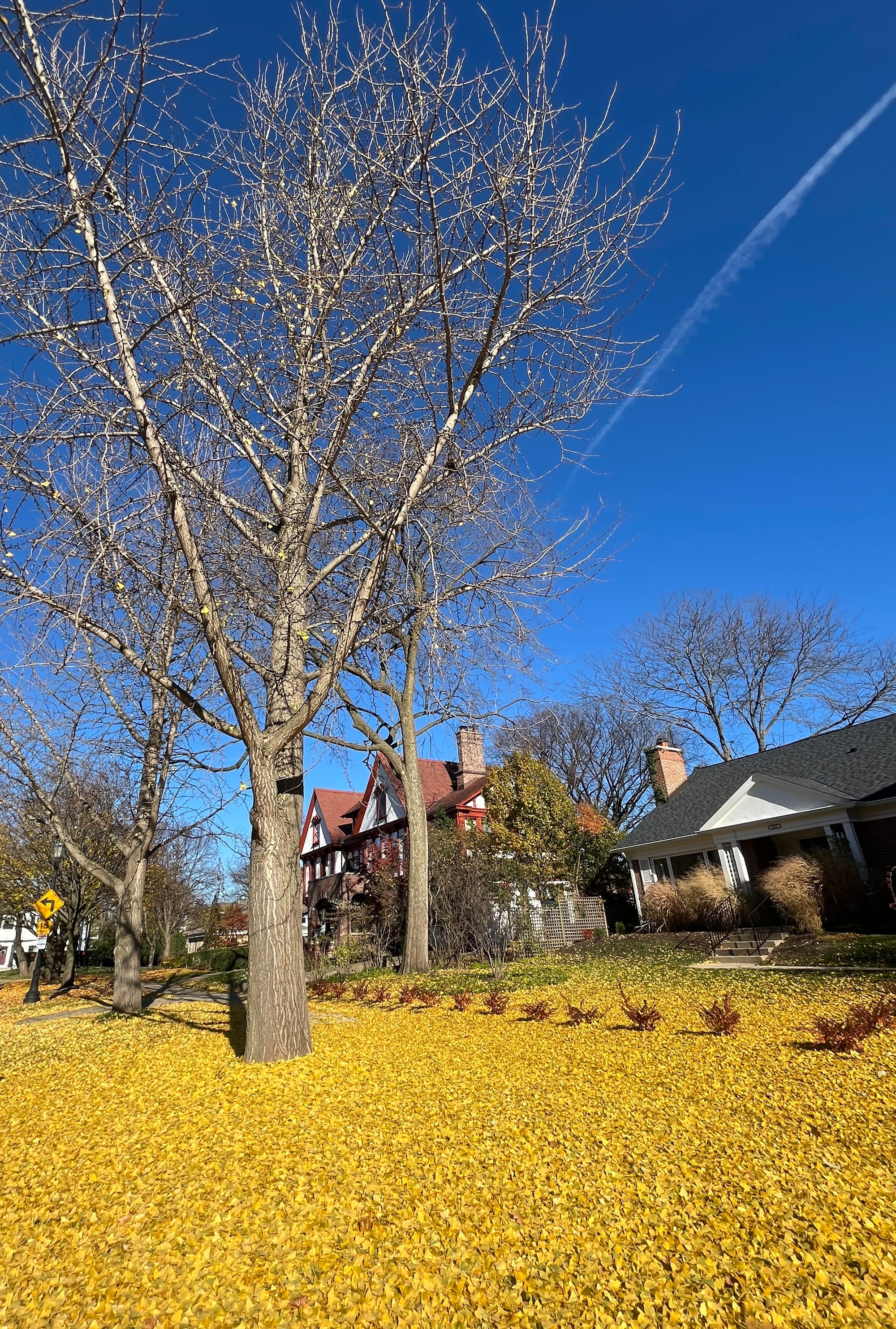
ginkgo leaves that have turned yellow, and fallen with in a several day period, leaving a yellow carpet on the ground.
bark on young ginkgo trunks is rough and grey, it furrows as it matures into flattened ridges like this.
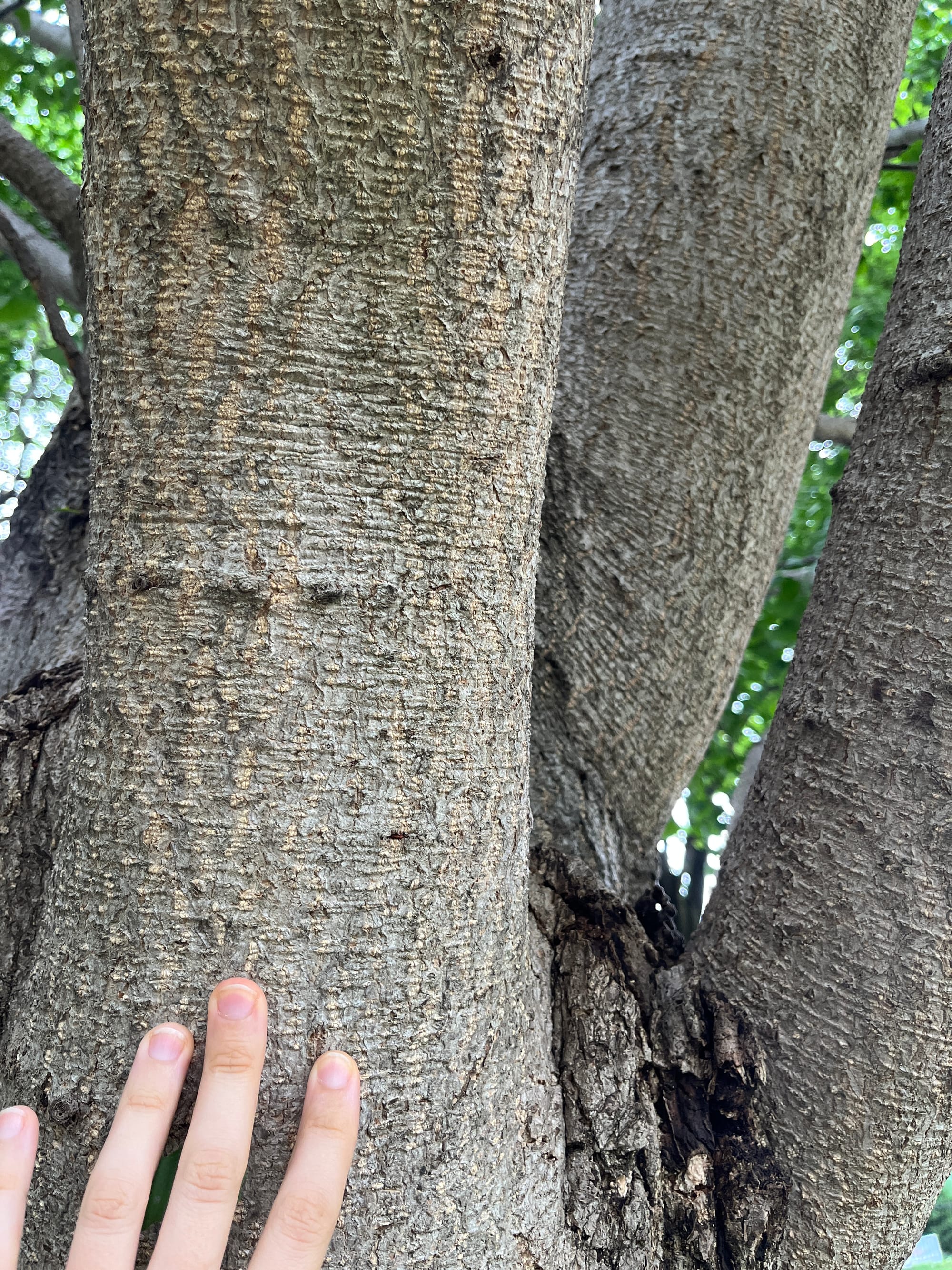
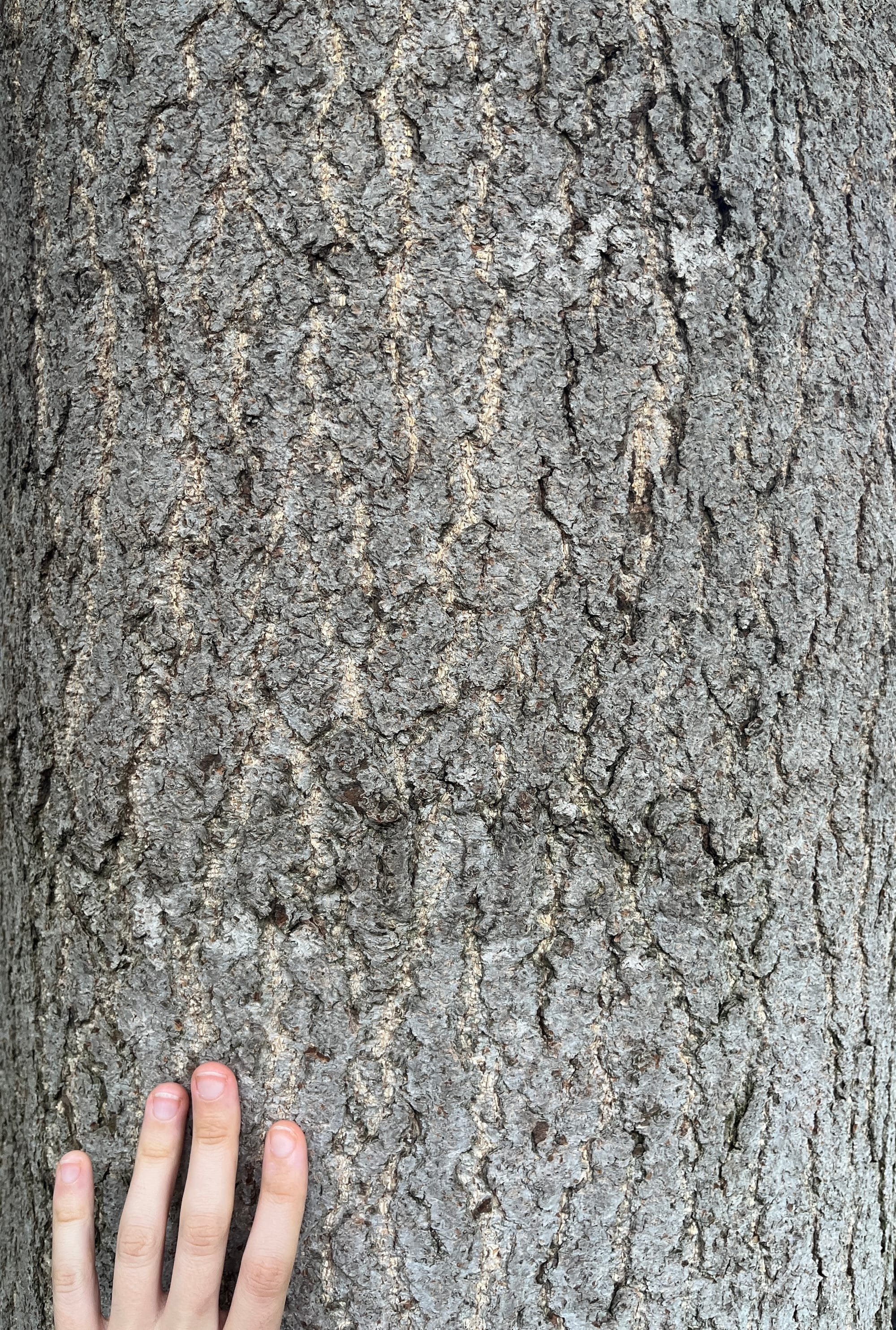
young ginkgo bark (left) vs more aged ginkgo bark (right).
ginkgo branch structure is also very specific. their growth form differs substantially from other gymnosperms–they have stubby, short pegs that protrude from the twigs from which clusters of leaves grow. these spur twigs, as they’re sometimes called, are very easy to identify, especially in the winter months, they look like small knobs sticking out from branches as you look up at the tree.
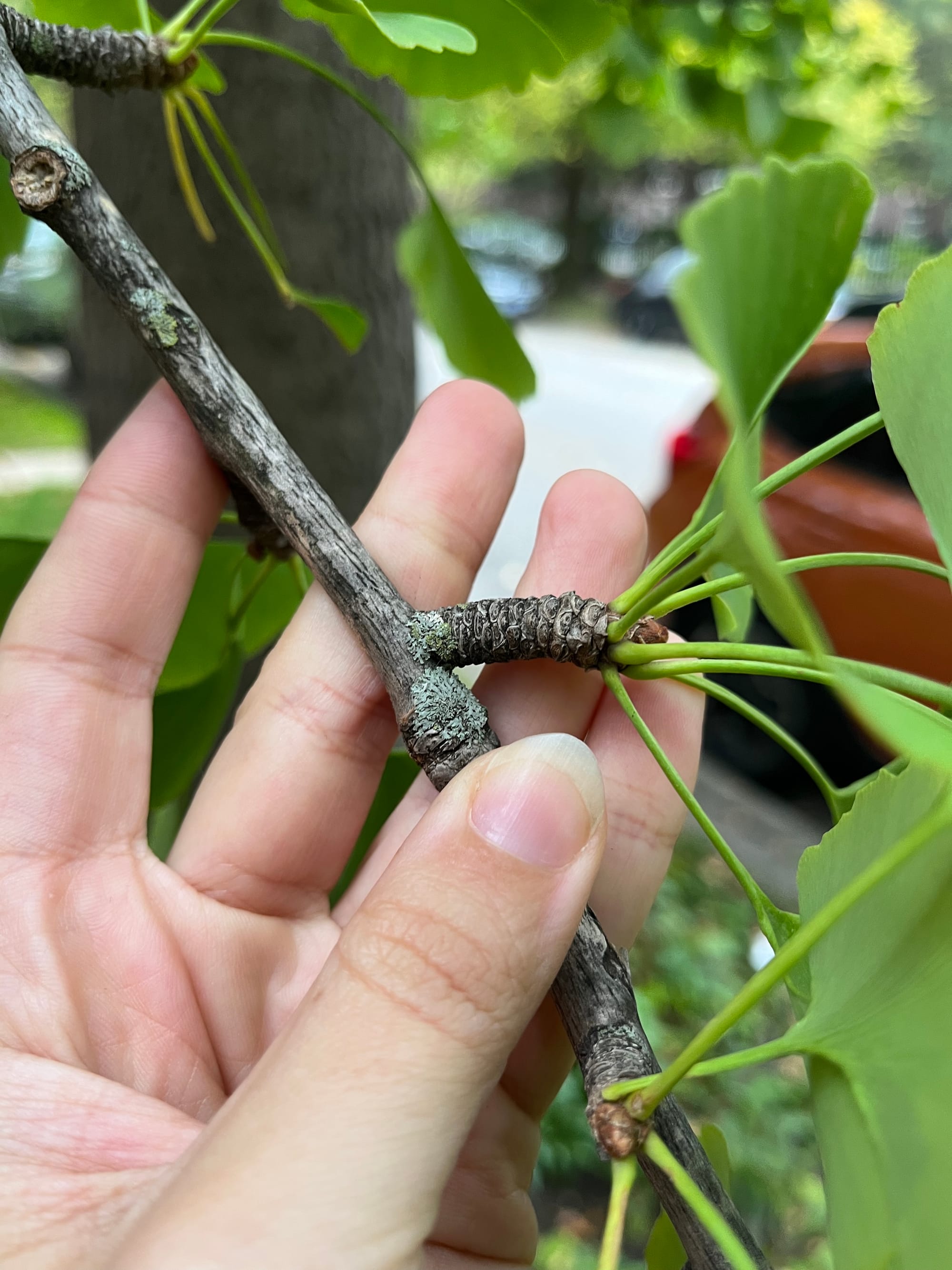
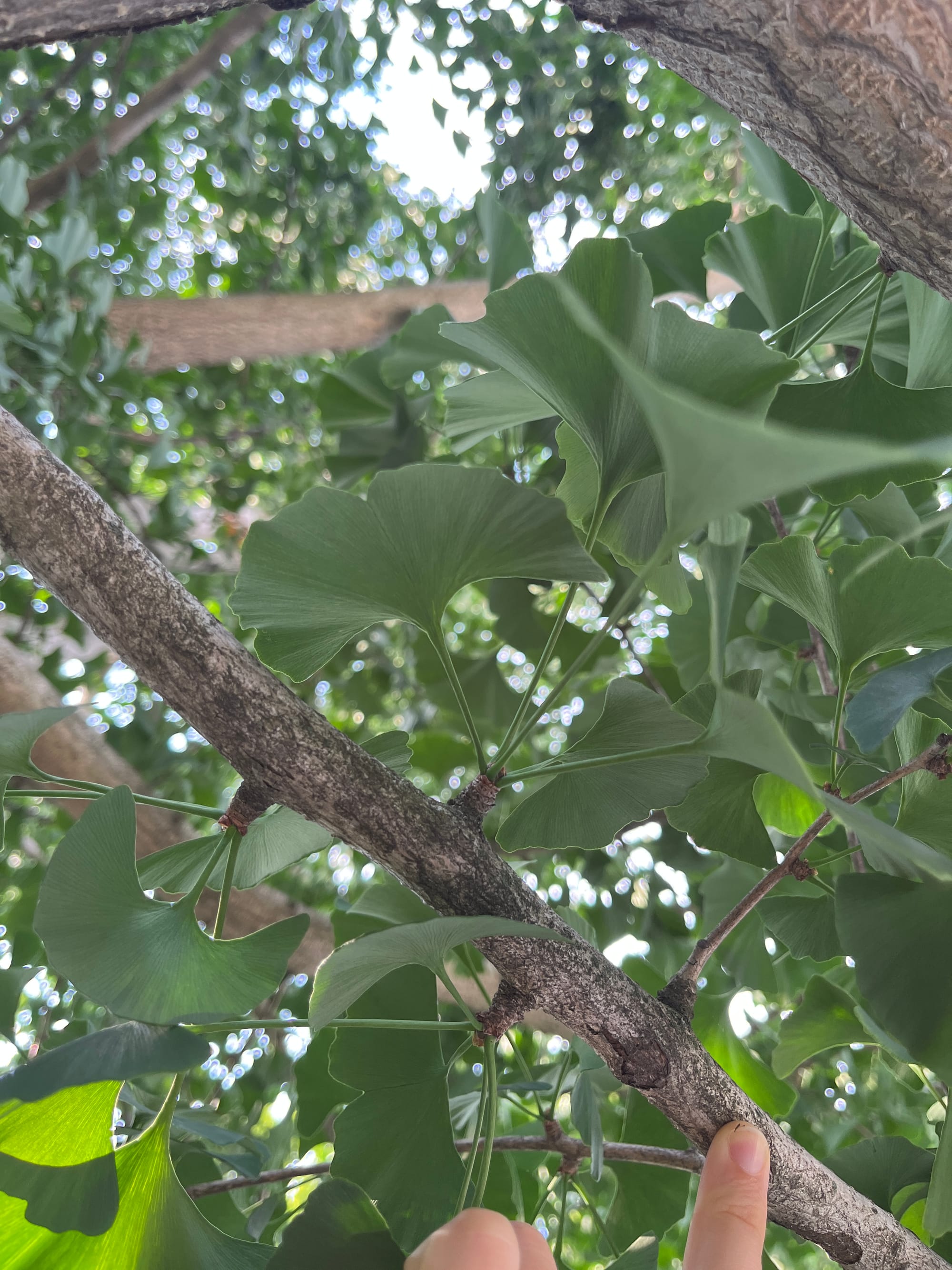
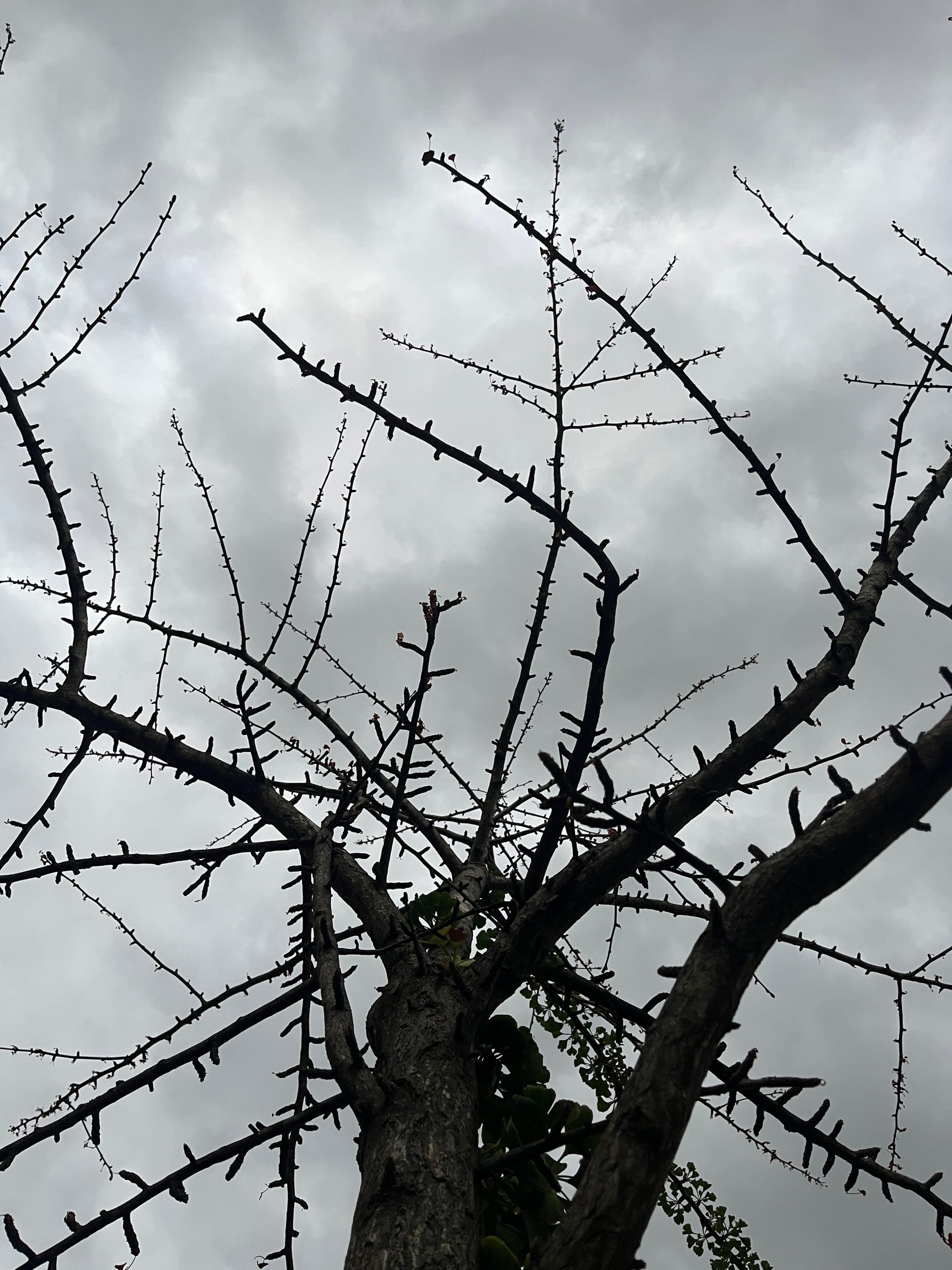
ginkgo spur (left), ginkgo spurs protruding in an alternate pattern from a branch (center), unique knobs that are extra visible on ginkgos when they have no leaves (right).
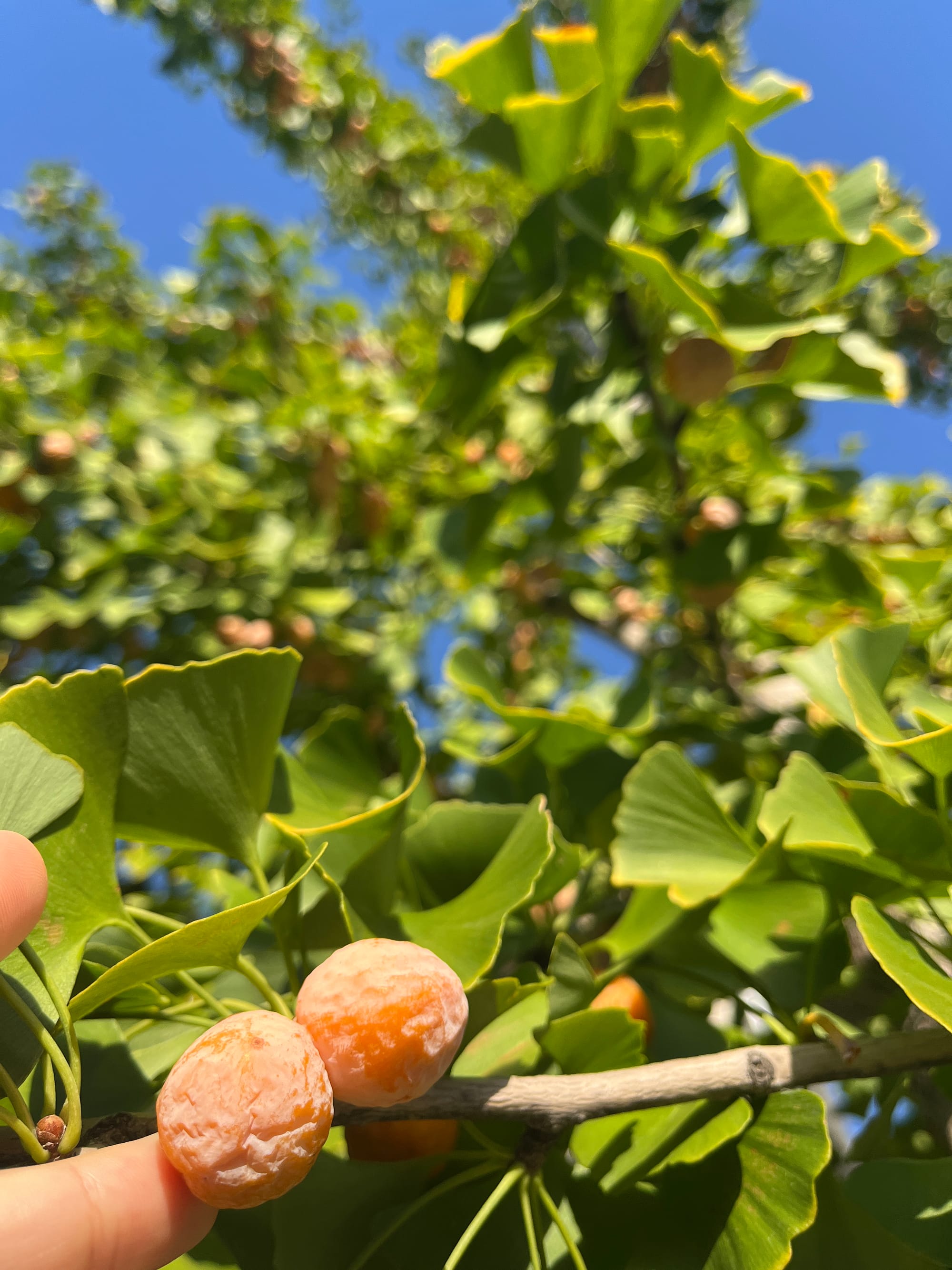
ginkgos are 𝑫𝑰𝑶𝑬𝑪𝑰𝑶𝑼𝑺 meaning trees either have all pistillate or all staminate flowers, but never both. they are pollinated by the wind and only reproduce if these pistillate and staminate trees are near each other. when pollinated, they produce "fruit" that ripens in the fall and smells quite rancid.
ginkgos are gymnosperms. gymnosperms means “naked seed” and this grouping includes all conifers, cycads, gnetophytes, and ginkgos. most gymnosperms are evergreen, meaning they have foliage that remains green and functional throughout the year–versus deciduous trees that shed their leaves for part of each year. ginkgos are one of a few deciduous gymnosperms–others are the tamarack or american larch (larix laricina), baldcypress (taxodium distichum), and dawn redwood (metasequoia glyptostroboides).
ginkgo fruit is technically a “naked seed” with a fleshy outer coat. pistillate ginkgo trees do not produce cones, rather, they produce a stalk with two ovules formed at the end. after wind pollination–from staminate trees that produce small pollen cones–they develop into fruit-like structures containing seeds (see photo above), but they are not true fruit and are thus categorized as gymnosperms. fun fact, ginkgo’s are one of the only trees to have motile sperm. ginkgo’s are also capable of clonal reproduction, but more on that later!
medicinally, green ginkgo leaves have been used to treat brain disorders, circulatory disorders, and respiratory diseases. there is a long tradition of ginkgo leaf extract being used to enhance memory, concentration, and treat headaches, as well as prevent dementia, especially vascular dementia as well as asthma, coughs, and bladder problems. raw ginkgo seeds are also thought to treat cancer (they are edible, but should be handled with caution as the fleshy part of the seeds contains urushiol, which is the same chemical that causes poison oak, ivy, and sumac–so always wear gloves and protect your skin whenever handling the fruit). cooked ginkgo seeds promote digestion.
go say hi to your ginkgo friends today--their leaves are turning yellow as you read this!