SYCAMORE & ELM bark bits
this bark bits was originally posted on IG on 2/4/24
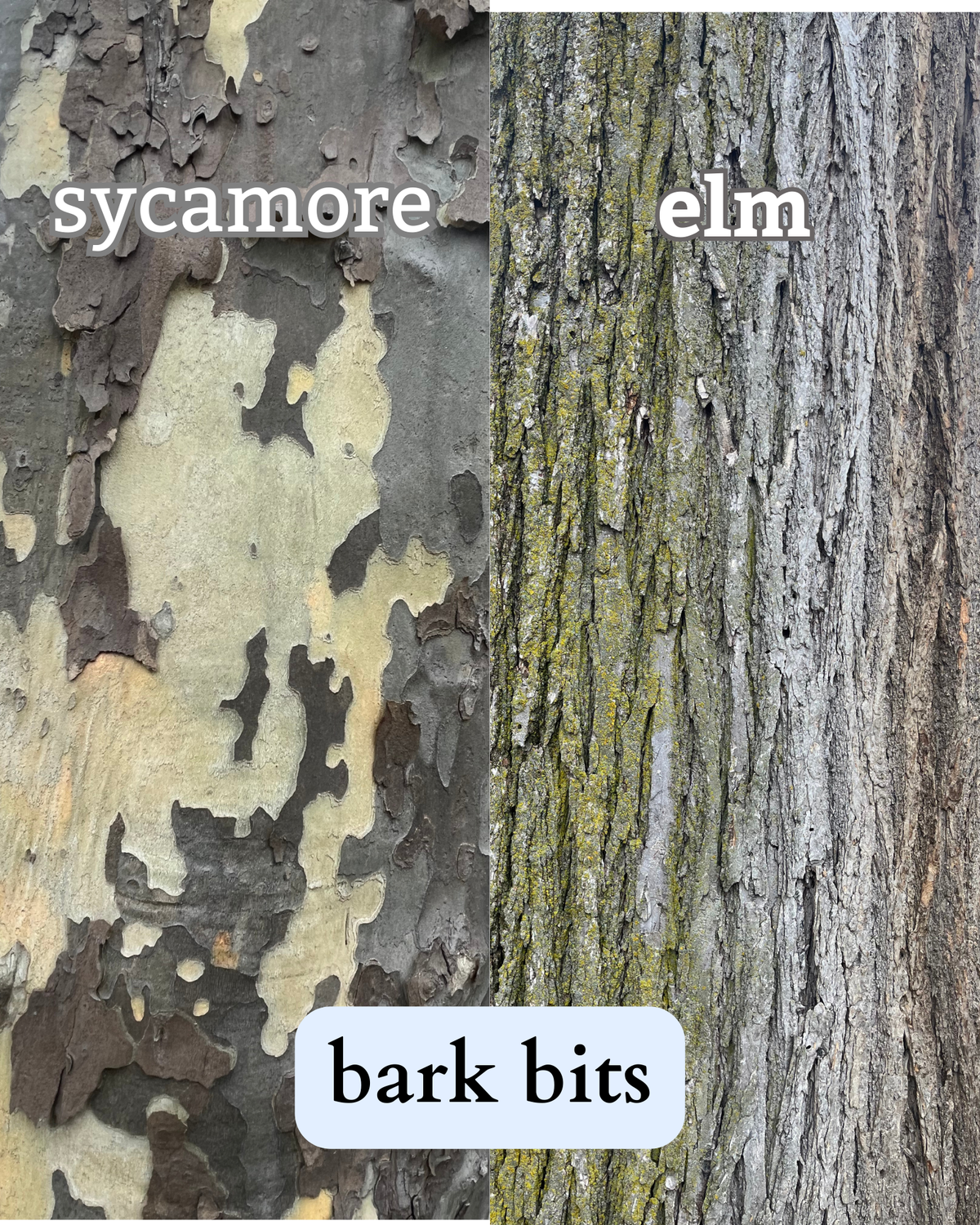
𝐒𝐘𝐂𝐀𝐌𝐎𝐑𝐄 bark is unique. young trunks have smooth, pale, mottled (spotted or blotched with patches of brown, green, gray, and white) bark that people say resembles a camouflage pattern. the bark of older, mature sycamores develops rough grey scales at the base, but if you look up the tree, the branches still show their classic sycamore mottled pattern.
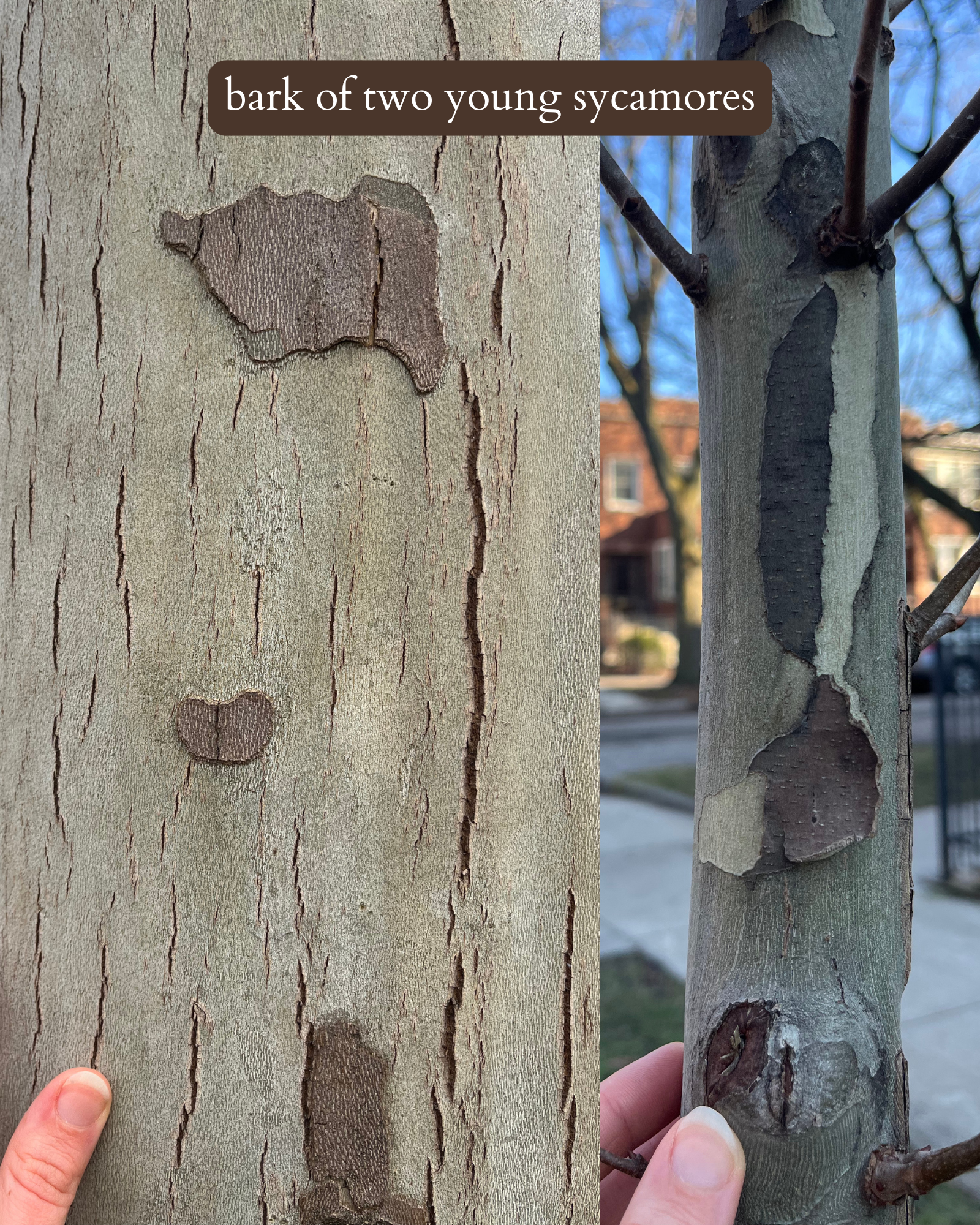
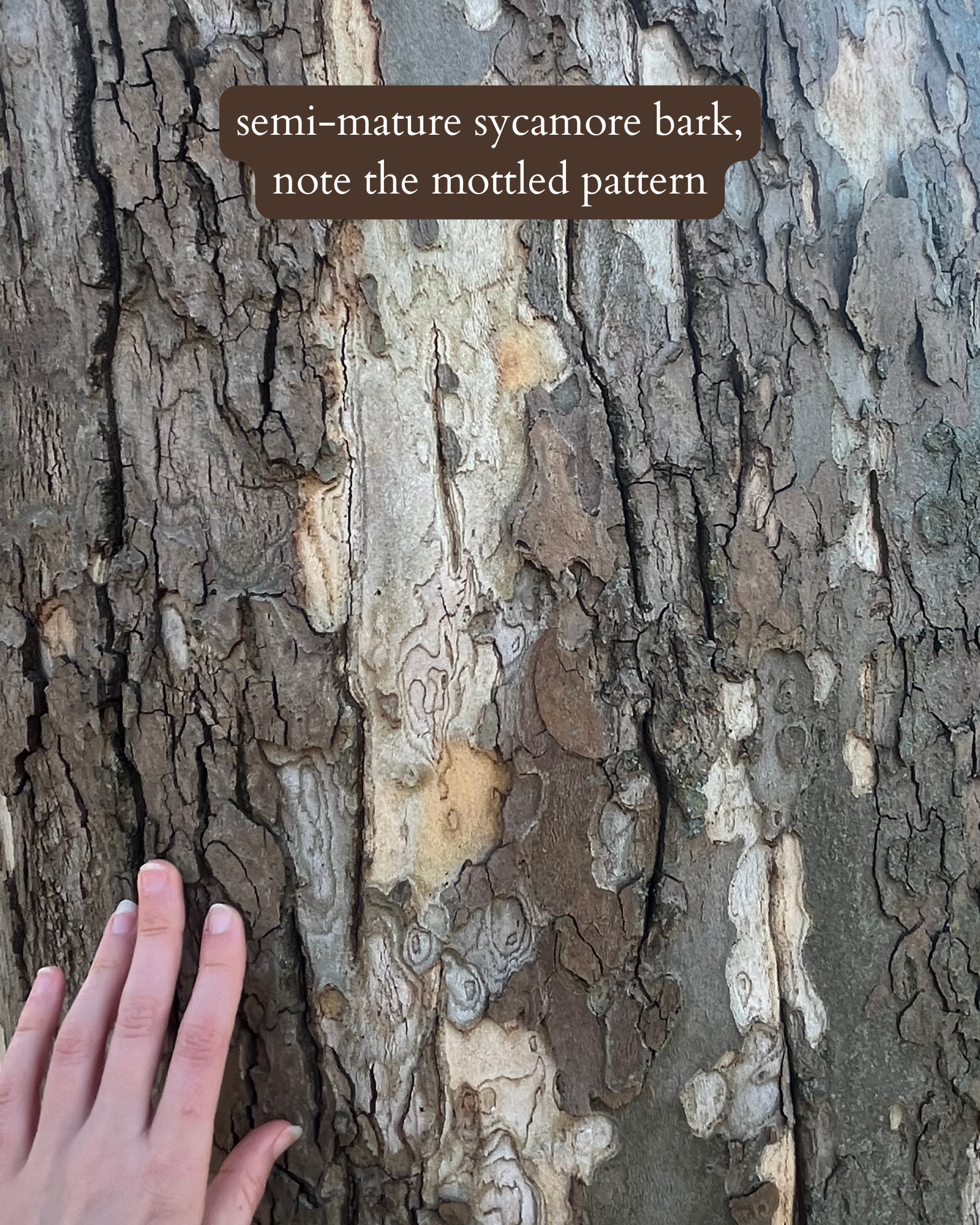
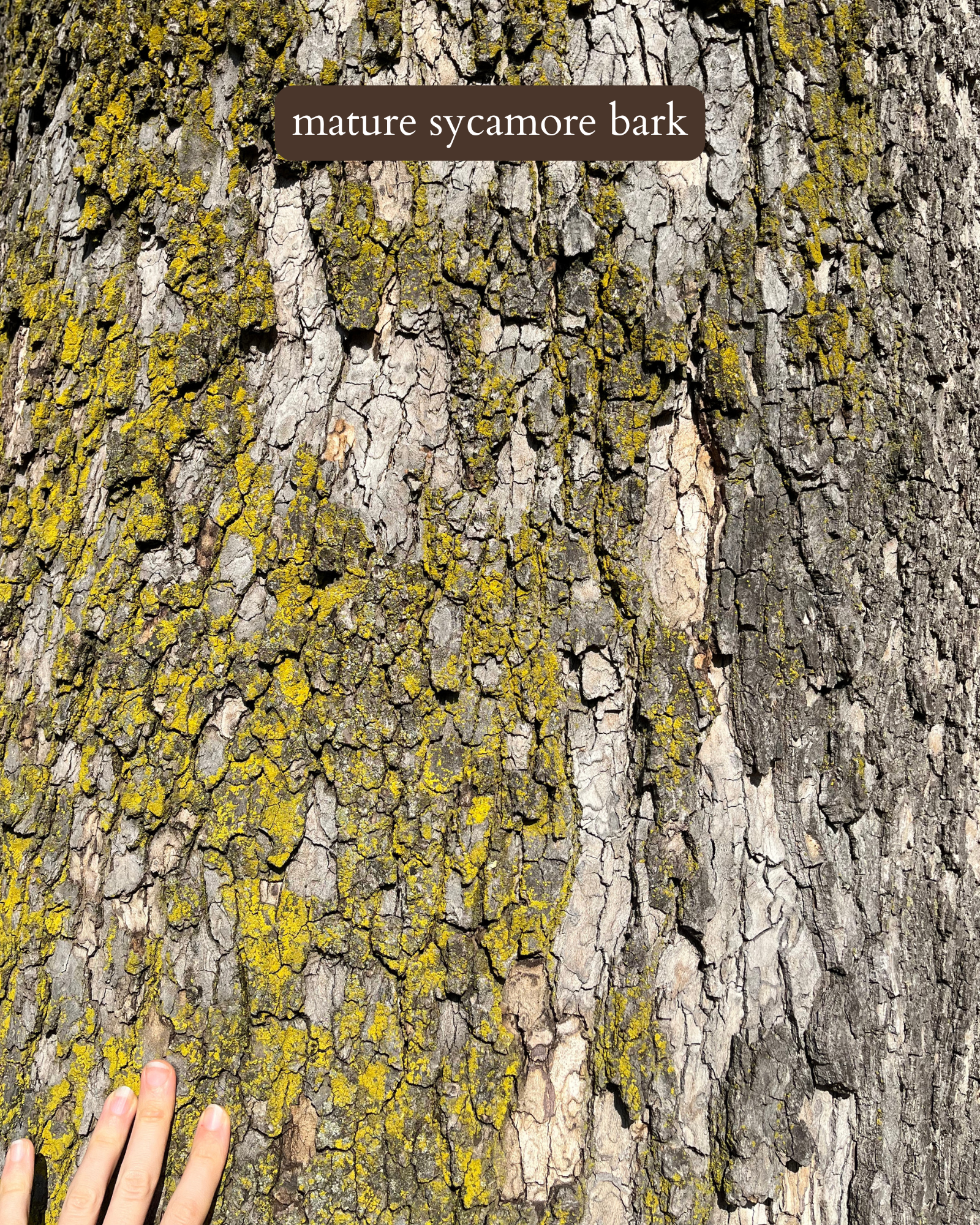
american sycamore bark–young to mature (left to right)
the bark often peels and sheds, leaving irregular shapes on the ground and revealing different colored inner bark (similar to chinese elms & lacebark pines). this is largely because the bark is brittle and can’t accommodate the fast growth of the tree, so it cracks and exfoliates.
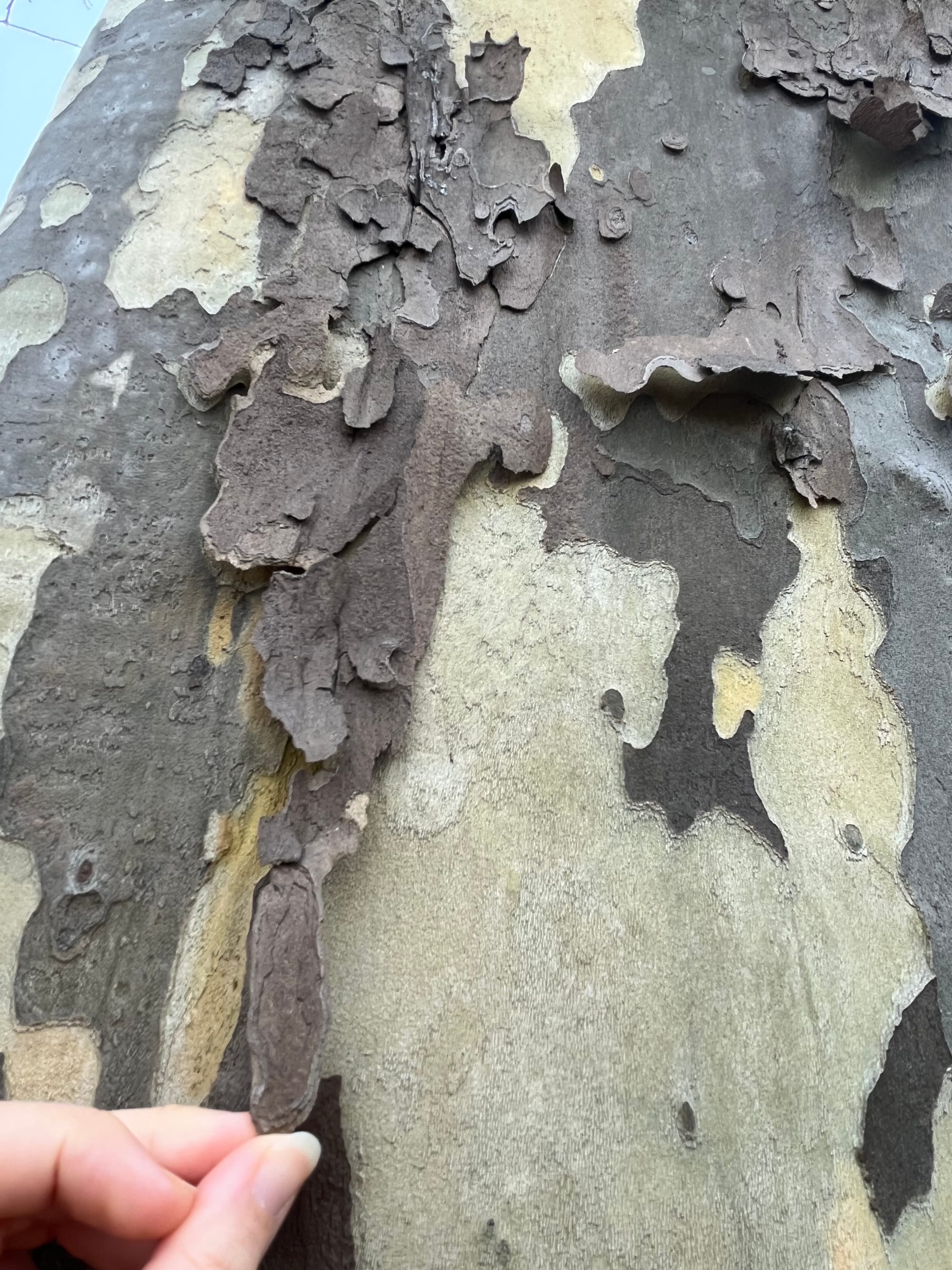
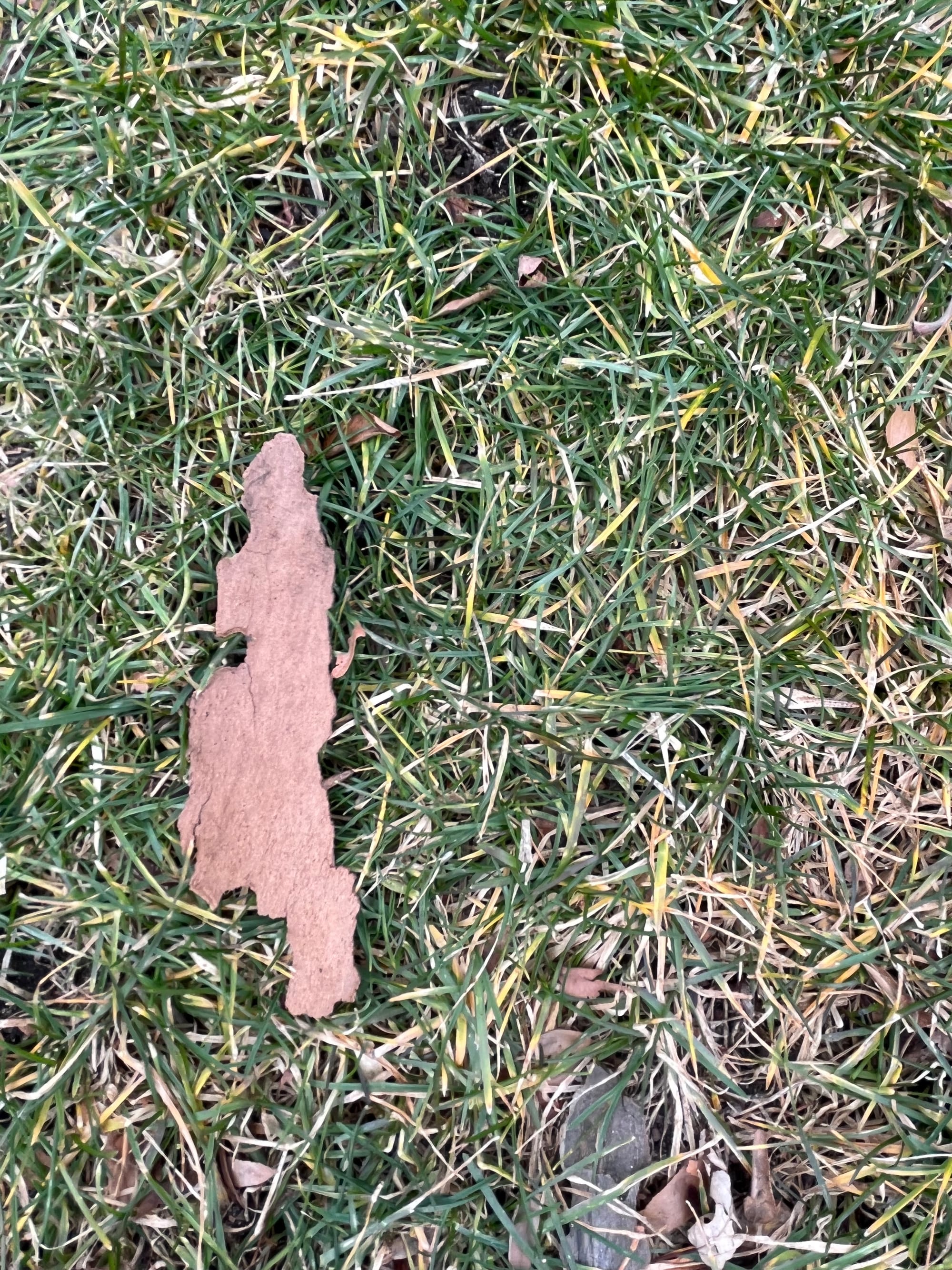
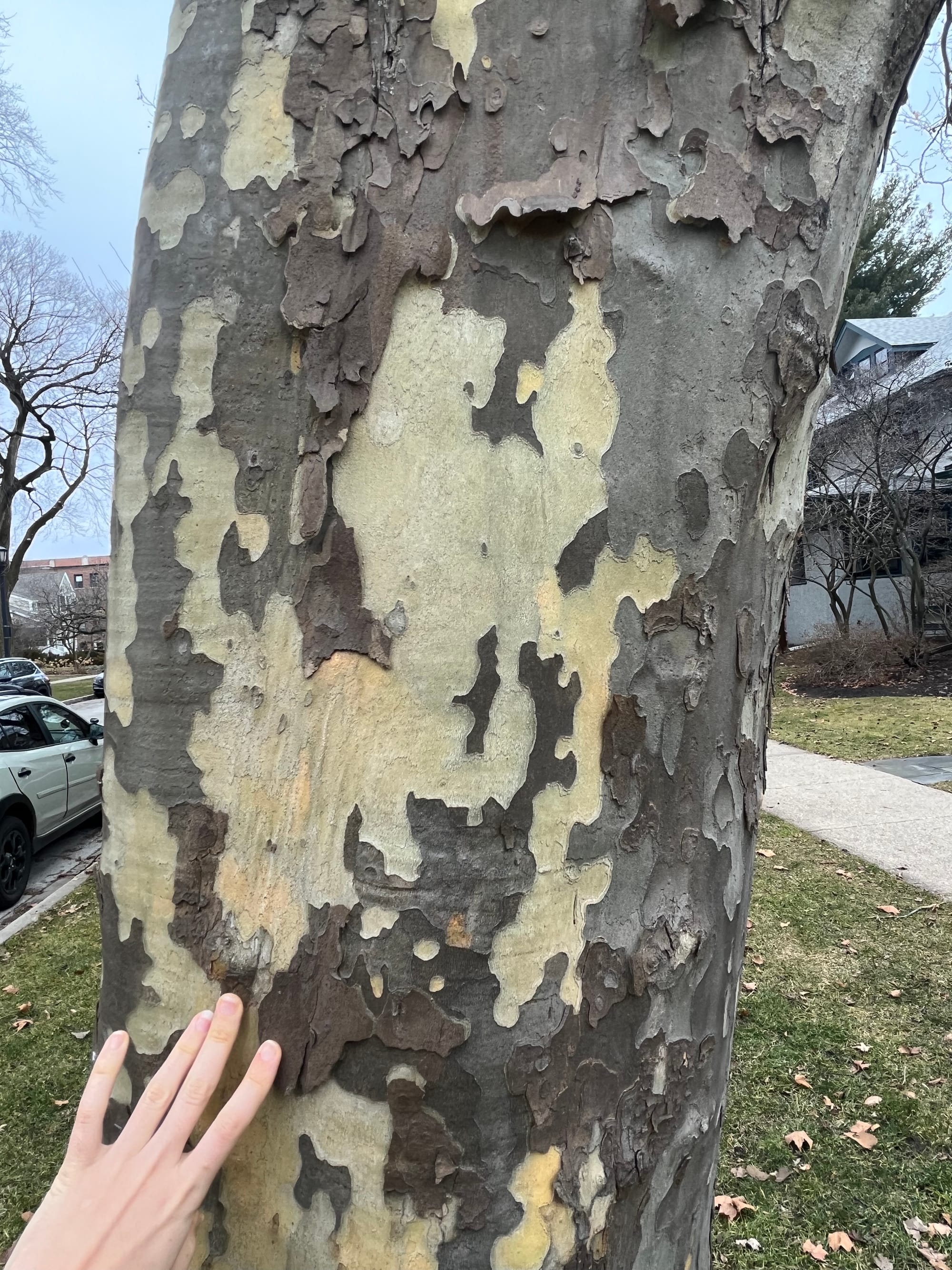
peeling, mottled, american sycamore bark
𝐀𝐌𝐄𝐑𝐈𝐂𝐀𝐍 𝐒𝐘𝐂𝐀𝐌𝐎𝐑𝐄𝐒 (platanus occidentalis) are the most common of the family on turtle island, though they do have a non-native look alike called 𝐋𝐎𝐍𝐃𝐎𝐍 𝐏𝐋𝐀𝐍𝐄𝐓𝐑𝐄𝐄𝐒 (platanus × acerifolia) which are a hybrid tree, bred between american sycamores and planetrees ( platanus orientalis). they are virtually indistinguishable, except for american sycamores only ever have one seed (fruit) ball hanging from a long stalk, while london planetrees can have up to 6 seed (fruit) balls per stalk.
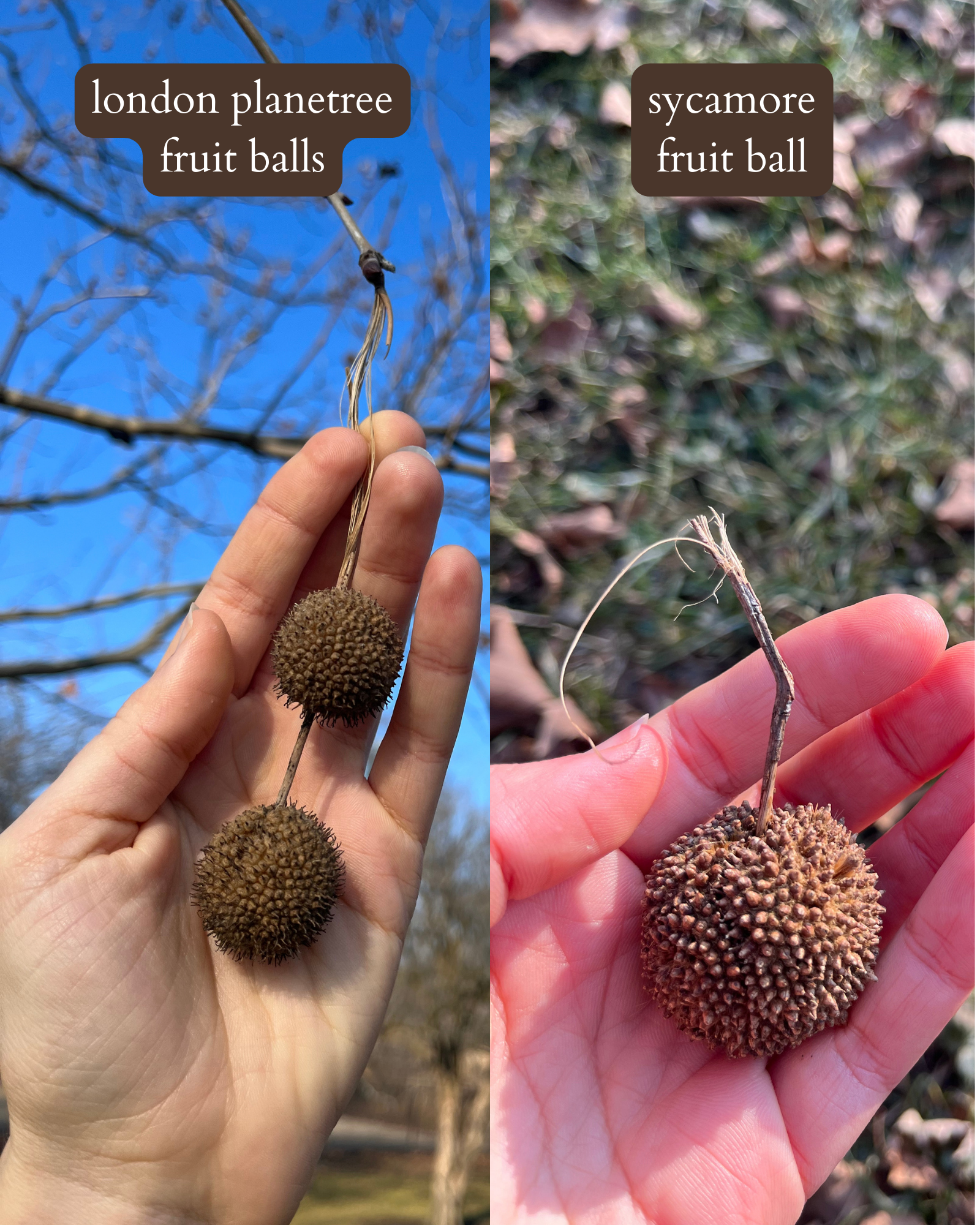
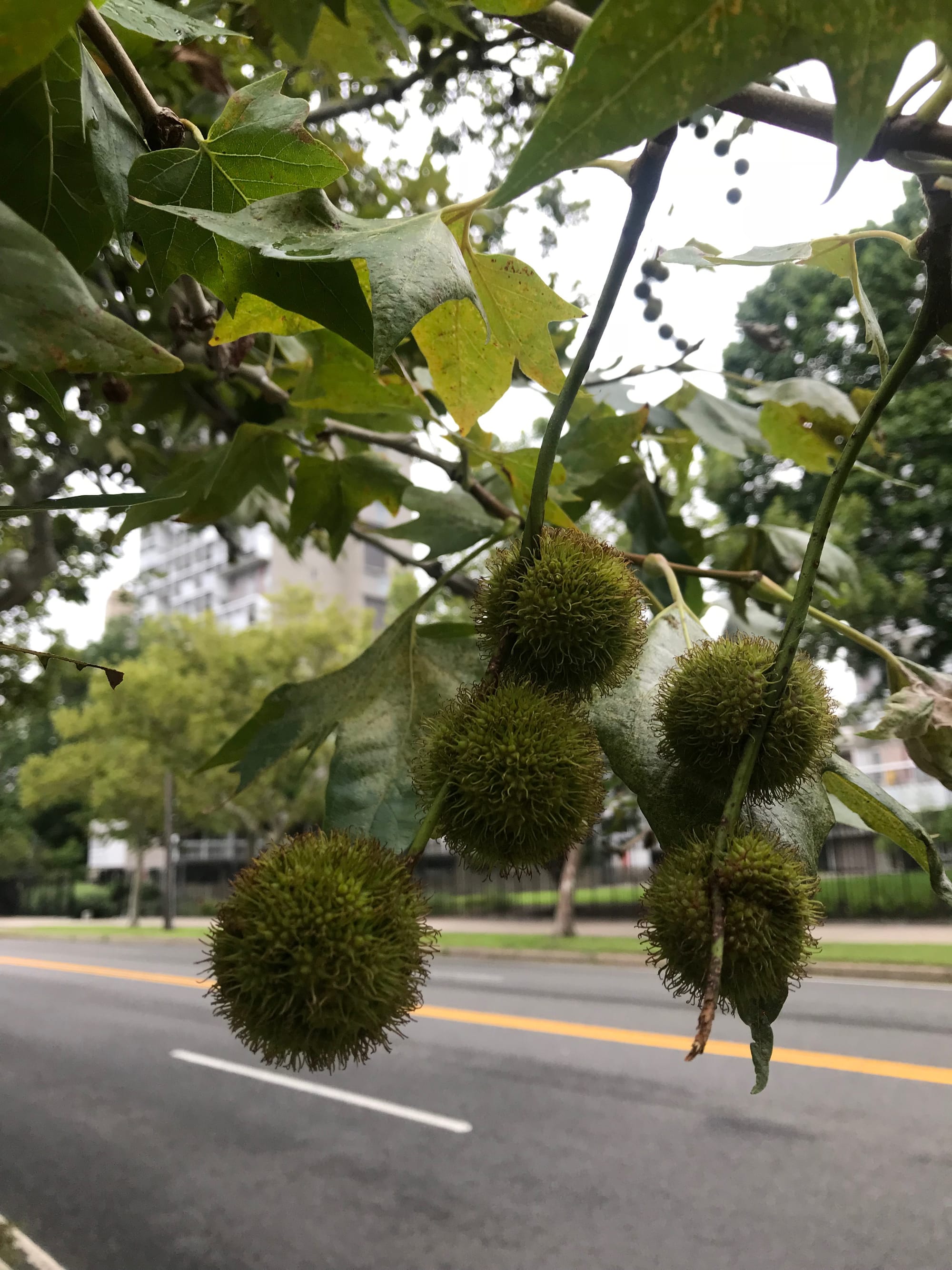
two london planetree seed (fruit) balls in fall and summer (left & right) and an american sycamore fruit (seed) ball (middle)
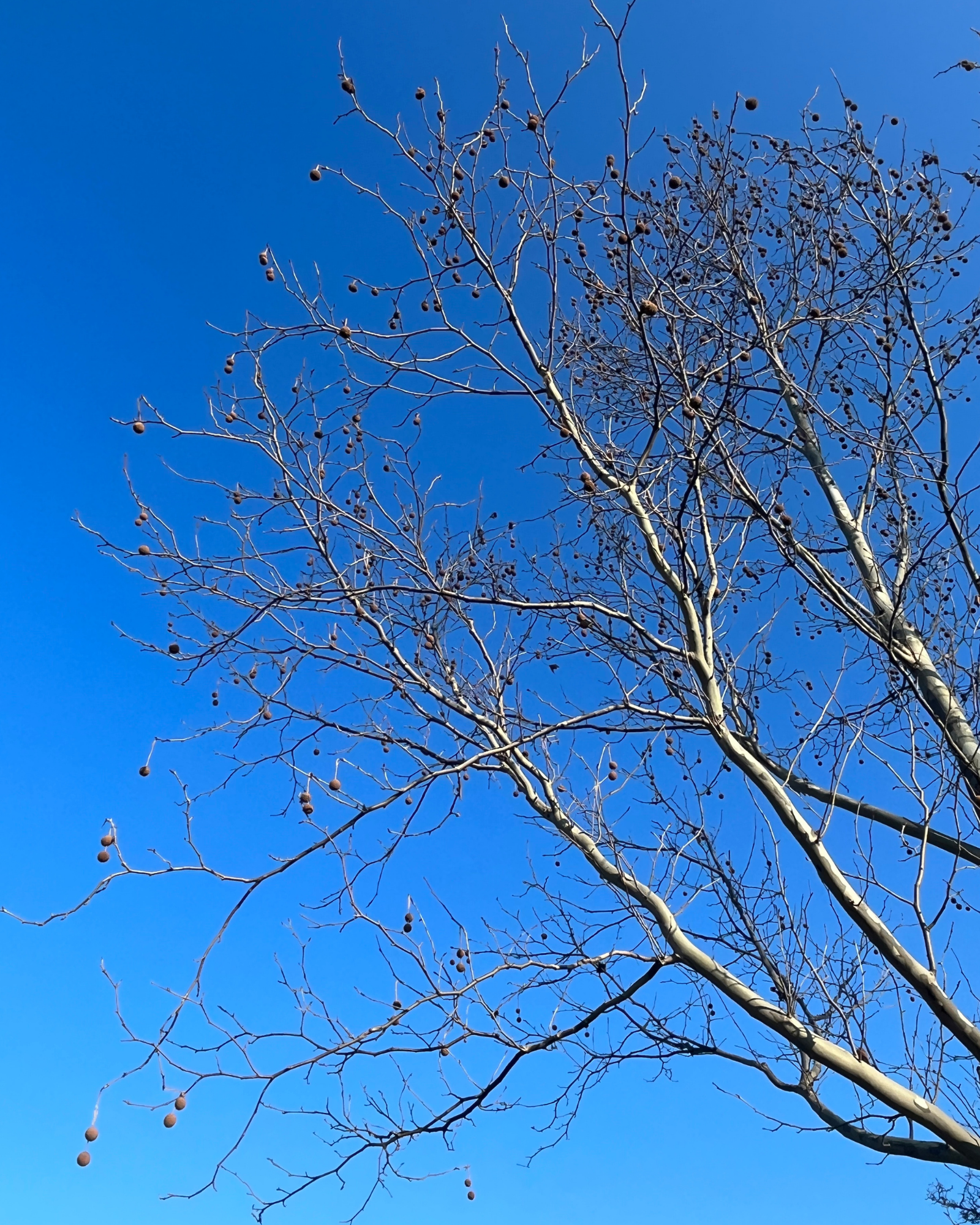
looking up at a london planetree–notice the multiple fruit (seed) ball chains
𝐄𝐋𝐌 bark can be a bit harder to identify. there are six native elm species on turtle island with five others commonly cultivated. young elm bark is slightly furrowed with scaly ridges, while mature elm bark is more deeply furrowed into narrow, irregular, interlacing ridges.
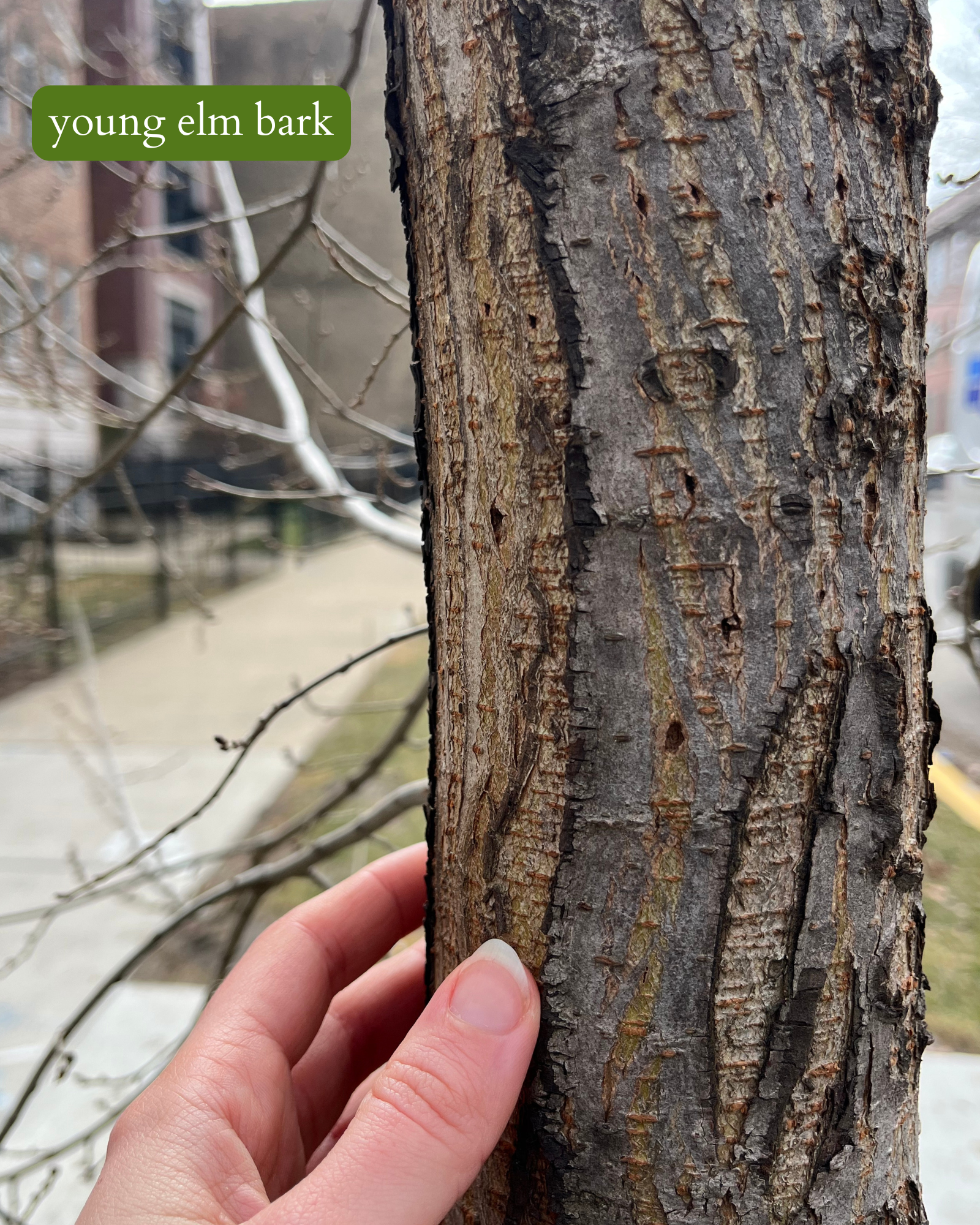
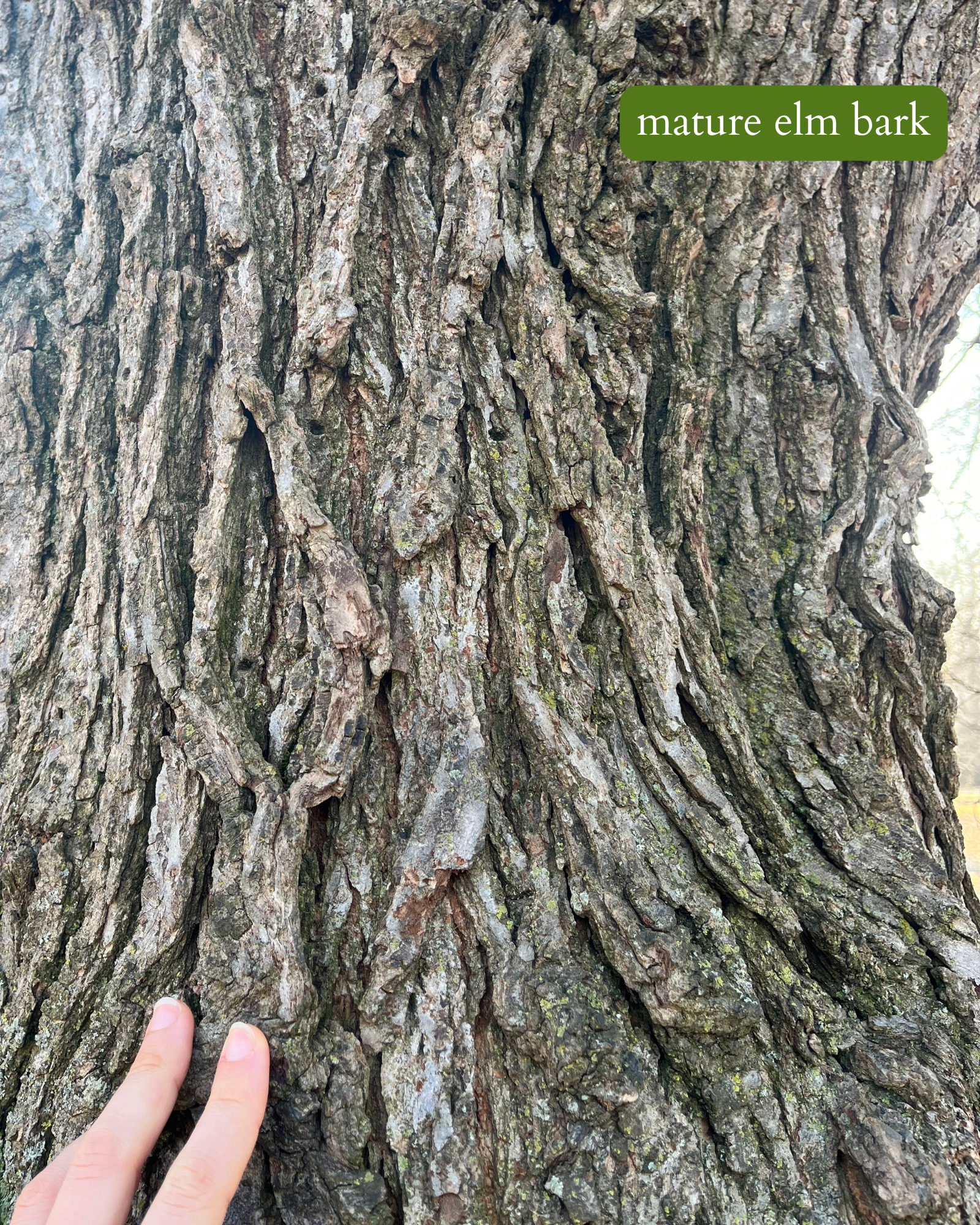
elm bark–young (left) to mature (right)
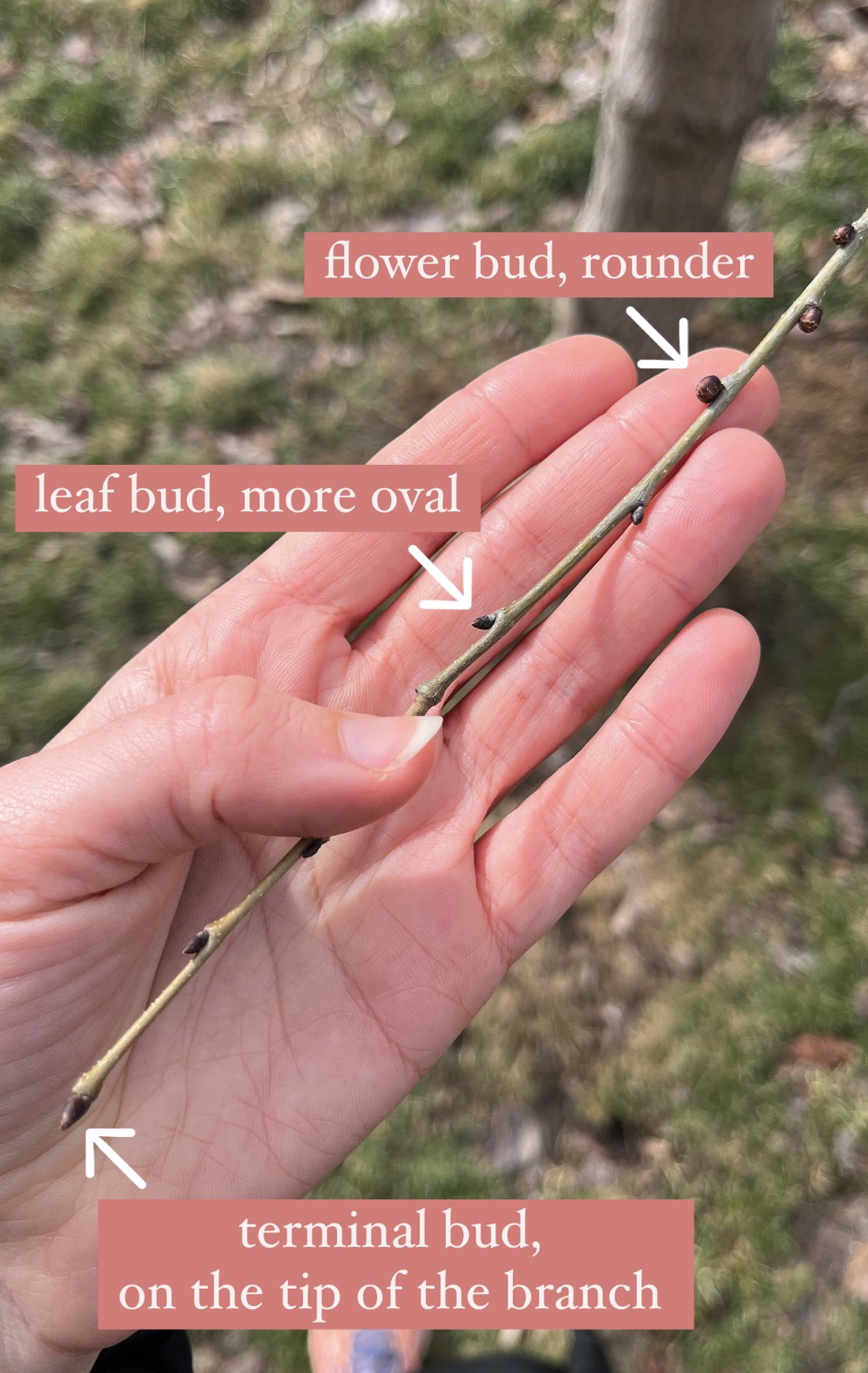
𝐀𝐌𝐄𝐑𝐈𝐂𝐀𝐍 𝐄𝐋𝐌𝐒 (ulmus americana, also called white or gray elms) and 𝐒𝐋𝐈𝐏𝐏𝐄𝐑𝐘 𝐄𝐋𝐌𝐒 (ulmus rubra) are two of the most common native species. they are very similar, but coloring is usually a gray brown on american elms and more reddish brown in slippery elms. the latter have slightly more scaly bark plates separated by shallow furrows. american elms buds are more oval whereas slippery elms have rounder buds. seeds on american elms are deeply notched with hairy margins and longer stalks, while slippery elm seeds are rounder with shorter stalks and unnotched (or only slightly notched) without hairy margins. slippery elms are named for their fragrant inner bark that is mucilaginous (slippery) and often used medicinally.
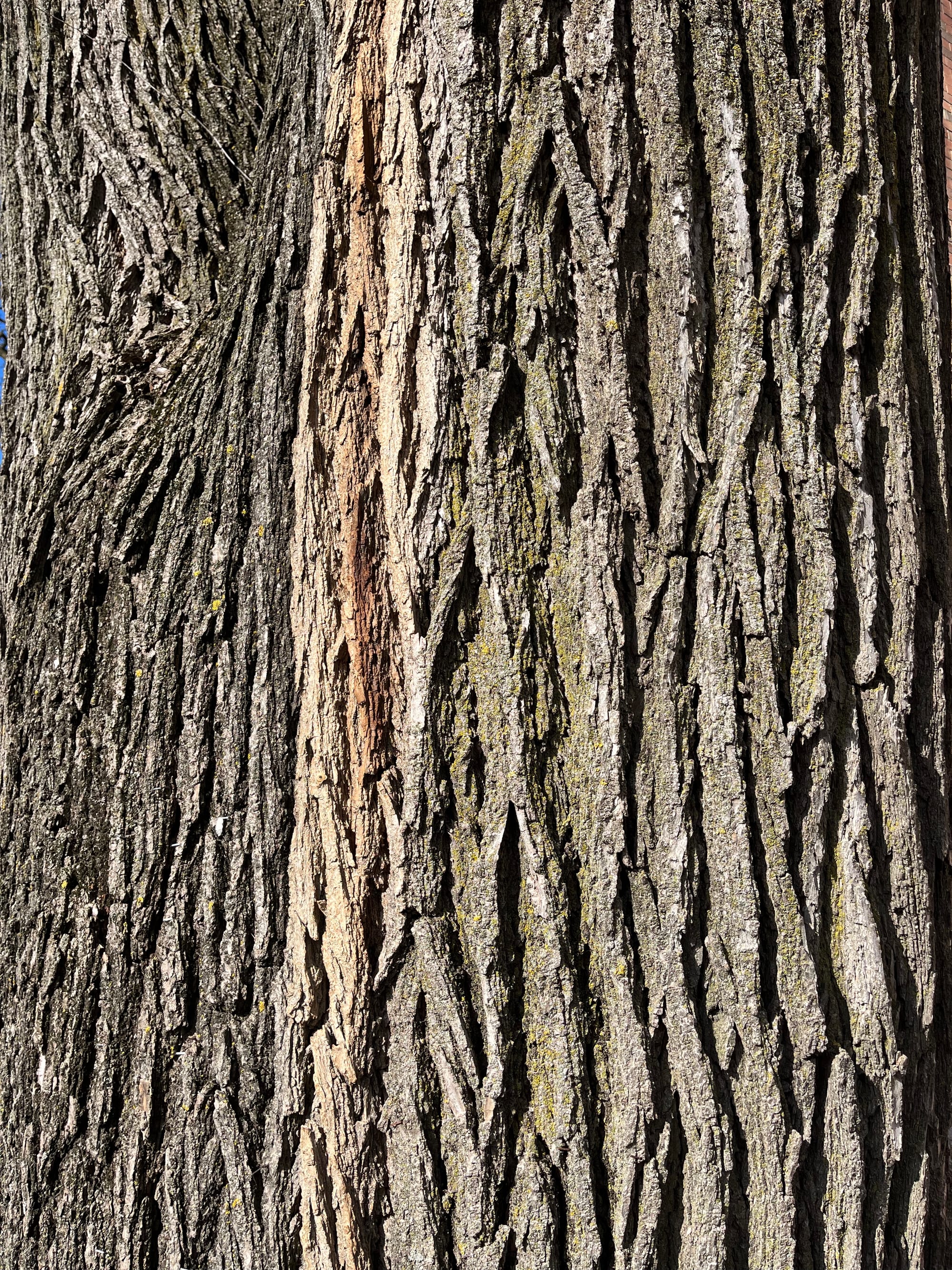
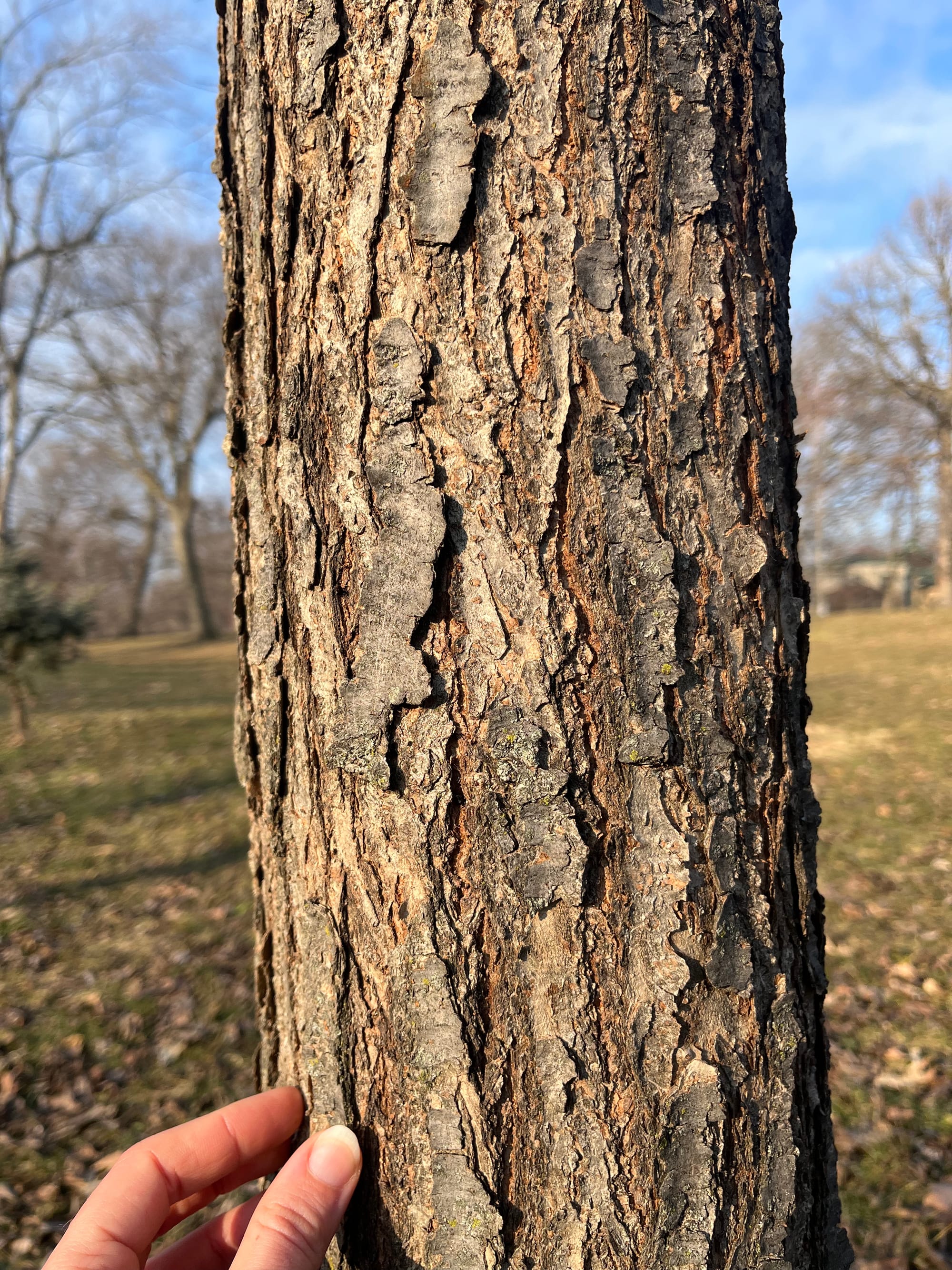
mature american elm bark that is furrowed in narrow, untidy, interlacing ridges (left) & semi-mature slippery elm bark that is more plated, scaly, and reddish brown (right)
in the winter, without leaves to help you identify trees friends, you can look for other clues such as:
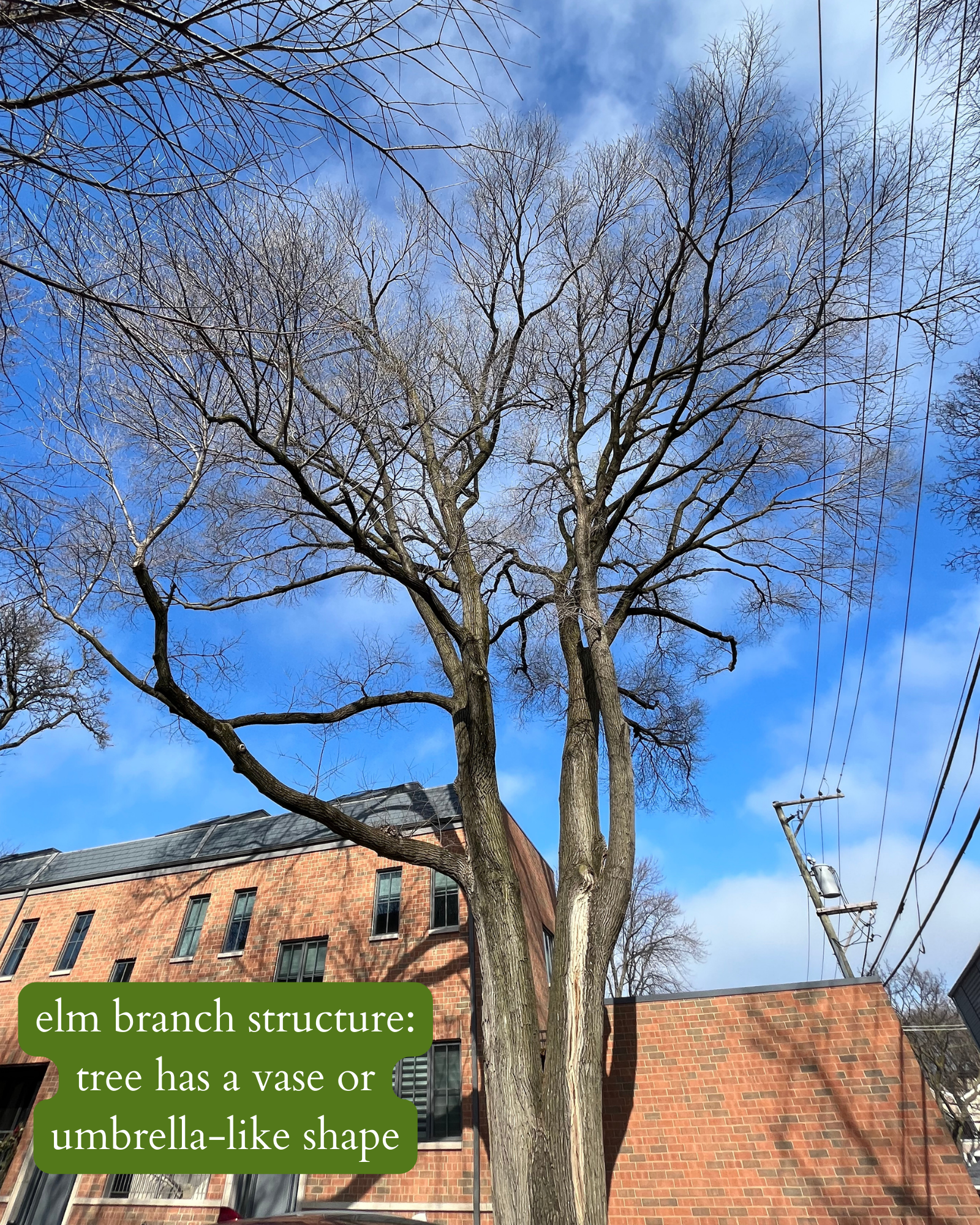
- 𝙱𝚁𝙰𝙽𝙲𝙷 𝚂𝚃𝚁𝚄𝙲𝚃𝚄𝚁𝙴 — often more visible in winter :)
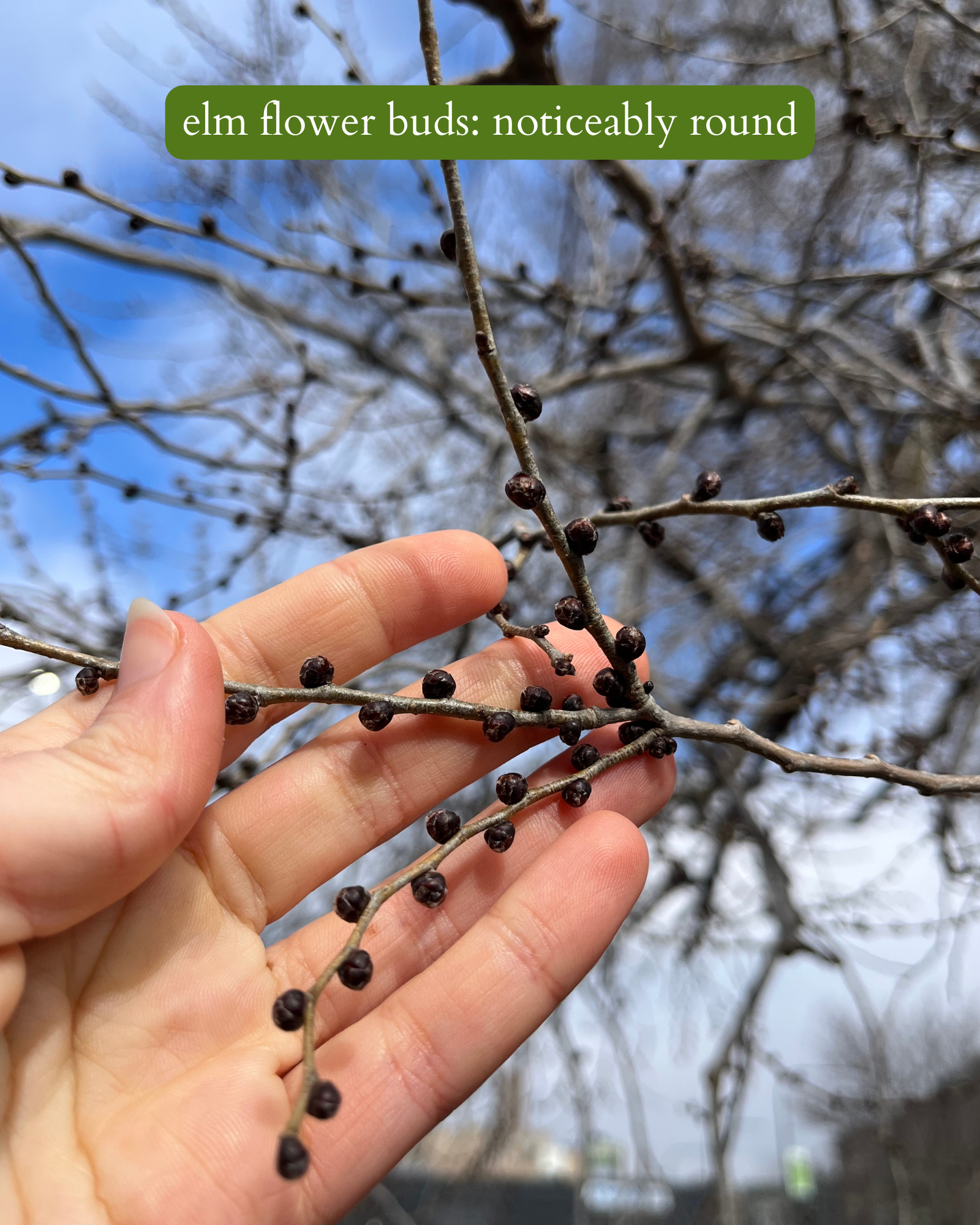
- 𝙱𝚄𝙳𝚂 — form in the summer and remain present thru the fall and winter until they open the following spring
- 𝚂𝙴𝙴𝙳 & 𝙻𝙴𝙰𝙵 remnants — some trees (like oaks) hold onto their dead leaves throughout the winter, other trees (like catalpas and kentucky coffeetrees) hold onto their seed pods throughout the winter
using elms as an example, their 𝙱𝚁𝙰𝙽𝙲𝙷 𝚂𝚃𝚁𝚄𝙲𝚃𝚄𝚁𝙴 is often described as "elegant", as people think as a whole, the trees are vase or umbrella shaped with rising branches from a single trunk. elm flower 𝙱𝚄𝙳𝚂 are often very round & stick out of the upper branches in an alternating pattern. elms don’t usually hold onto their 𝚂𝙴𝙴𝙳𝚂 or 𝙻𝙴𝙰𝚅𝙴𝚂 through the winter.